Wednesday Weed – Alexanders

Alexanders (Smyrnium olusatrum)

Dear Readers, I love it when I find a ‘weed’ that I’ve been looking out for for a while, especially when it pops up in the most unlikely of places. Alexanders, a member of the carrot family, was growing in profusion all over some fly-tipped crates on the edge of Muswell Hill Playing Fields. I have never seen it before, and so I was delighted to make its acquaintance, even on this most unpromising of sites. When it gets going, it has big, blousey roundels of yellow-green flowers, and the glossy green leaves are most attractive.

Alexanders is said to be native to Macedonia, birthplace of Alexander the Great, and there is a legend that he discovered it. I have always been intrigued by the tales of Alexander, in particular the part where he tames his horse, Bucephalus, by understanding that it is afraid of its shadow. When I contracted chicken pox a few years ago (and a right bundle of laughs that is) I got through by reading a young adult novel called ‘I am the Great Horse’ by Katherine Roberts, which is a thumping good read, though I am not altogether sure about its historical accuracy. And then there is also the 2004 film ‘Alexander’, featuring Colin Farrell in a blond wig so terrible that I’m surprised he didn’t sue.

Photo One from https://historycollection.co/history-film-historical-accuracy-8-classic-movies/8/

I rest my case (Photo One)

But to return to the plant. Alexanders does have classical origins in the UK, having been brought here by the Romans, who called it parsley of Alexandria, and are reputed to have carried it with them as a tasty snack on their long marches. I have also read that the Romans used it to feed their horses, hence the alternative name of ‘horse parsley’. It was was quickly identified as a useful medicinal herb, and was planted extensively in monastery gardens: it can often be found in the ruins of abbeys and castles. Whether there was once a monastery abutting the playing fields remains to be seen. It is also a plant of the shoreline, and it can be badly damaged by frost, hence its preference for warmer areas.

Alexanders was largely used as a medicinal herb, for staunching blood flow and treating sores. Strangely enough, it was used to stimulate menstrual bleeding. It is high in vitamin C, and was used as a preventative against scurvy long before people knew that the disease was caused by not enough fruit and vegetables – sailors off the coast of Wales used to disembark to collect Alexanders for just this purpose.

The carrot family as a whole has a Jekyll and Hyde character: some of our most useful and delicious vegetables are here (carrots, celery, parsnips, angelica, caraway) but so are some of the most poisonous plants in the UK, such as hemlock. Fortunately, Alexanders is one of the former: the leaves, upper parts of the roots and the flowers were all eaten until celery came along and took over. In Ireland, the plant was used, along with nettles and watercress, as part of ‘Lenten pottage’, a gruel made during Lent. There are some rather nice recipes on the Eden Project website here. And, though I’m not sure that my Dad would have approved (he liked his gin to be Gordon’s and if anyone was going to mess about with it, it was going to be him), there is a rather fine blog post about making gin flavoured with Alexanders here.

The Latin name Smyrnium refers to the plant’s myrrh-like odour. Sadly I have no earthly idea what myrrh smells like, but apparently the musky smell of the flowers helps to attract pollinating insects, particularly hoverflies, those underappreciated little creators of new life. The smaller flies are often spotted on the flowers of the carrot family, and there is a lovely collection of species here. I wonder if Alexanders might be particularly attractive because of its yellow colour, however? There is one study on a very common hoverfly, the drone fly (Eristalis tenax), which shows a clear preference for golden flowers, and I have noticed that my marsh marigolds are largely ignored by bees, but are very popular with flies.

What an interesting fly the drone fly is! For one thing, the males hold a territory for their whole lives, and will attack not only other male flies but bees, butterflies and even dragonflies (though that would probably make for a shortish lifespan). This is exhausting for the male, and when he can he zips off to an area outside his territory (and presumably not part of anyone else’s ‘manor’) for a rest. The black line down the body of the fly is right above a very important blood vessel, and as black is a colour that absorbs heat, it helps the insect to get going in the morning. Furthermore, this little chap is pretty much universal, on every continent except Antarctica, and has even been found in the Himalayas, so you’ll all know what he (or she) looks like. In fact, the male and female look different, so here are some photos for comparison.

Photo Two by By Charles J Sharp - Own work, from Sharp Photography, sharpphotography, CC BY-SA 4.0, https://commons.wikimedia.org/w/index.php?curid=51349218

Female Drone Fly (Photo Two)

Photo Three by By Alvesgaspar - Own work, CC BY-SA 3.0, https://commons.wikimedia.org/w/index.php?curid=3211670

Male drone fly (Photo Three)

So, Alexanders is not only medicinal and tasty, but it provides food for hoverflies too. Now that I’ve found it once, I wonder if it will crop up everywhere? And what other ‘common’ weeds will I find that I’ve not seen yet? Pellitory-of-the-wall is supposed to be a London specialist, but not around here (though if you’re an East Finchleyite and have a secret patch of it, let me know!). In the meantime, I shall be keeping a very close eye on our unweeded gardens and roads to see what I can see. While we don’t yet have deer in our gardens or wild goats munching the wallflowers, we do have rather a lot of sow thistle.

Photo Credits

Photo One from https://historycollection.co/history-film-historical-accuracy-8-classic-movies/8/

Photo Two by By Charles J Sharp – Own work, from Sharp Photography, sharpphotography, CC BY-SA 4.0, https://commons.wikimedia.org/w/index.php?curid=51349218

Photo Three by By Alvesgaspar – Own work, CC BY-SA 3.0, https://commons.wikimedia.org/w/index.php?curid=3211670


A British Garden Bird Quiz – The Answers and a Request for Advice.

Dear Readers, very shortly we will get onto the answers to the quiz, but firstly I need some advice.

What you see in the photo above are not two Jamaican ginger cakes with mould on them, but two Christmas presents. Each one is a bar of compost already loaded with bee and butterfly seeds:  scabious and valerian, hyssop and lavender, verbena and thyme. They have exploded into life in my sunny south-facing window with great enthusiasm, and I am watering them gently and turning them round and, I confess, talking to them (such are the perils of lockdown). However, I am not sure at what point I should be repotting them. The advice that came with them suggested that they should be potted on when they have four leaves, but I’m assuming that it meant four proper leaves, not the baby ones that they all seem to have at the moment. How do you judge when they are big enough to pot on? If I do it too soon I fear that they will be too delicate, but if I do it too late their growth will be stunted.

Oh the responsibility! My Dad would have known what to do: even after he had dementia he was still ordering them all about in the nursing home garden. Sadly i think he is now too busy having a gin and tonic in the garden with Mum to attend to my pleas, so I am turning to you lot instead – you feel like family to me, after all. So let me know what you would do. I’m thinking that they’ll probably need potted on twice before they’re strong enough for my slug-infested garden? Please assume that I know next to nothing, and you won’t be far wrong.

Anyway. Back to the quiz.And the winners, with a stunning 24 out of 26, are Fran and Bobby Freelove – very well done! And a hearty hug to Alittlebitoutoffocus and Joanna Smith, who both got 19 out of 21 on the photos, but Alittlebitoutoffocus just nudged ahead on the bird calls. Thanks also to Gibson Square for a very respectable score of 14, and to sllgatsby for making me laugh.

Was it fun? I apologise to my non-UK readers, maybe I’ll knock together a North American quiz at some point in the future but I fear that unless you’d like Bornean or Costa Rican birds from my recent trips, folk in other countries might be out of luck for the time being. There are lots of other quiz possibilities though – plants spring to mind and I could definitely do a quiz on frogs. All suggestions welcome.


So, here are the answers.

One – Blue Tit (Cyanistes caeruleus)

Two – Collared Dove (Streptopelia decaocto)

Three – European starling (Sturnus vulgaris)

Four – Great Tit (Parus major)

Five – Goldfinch (Carduelis carduelis)

Six – House sparrow (Passer domesticus)

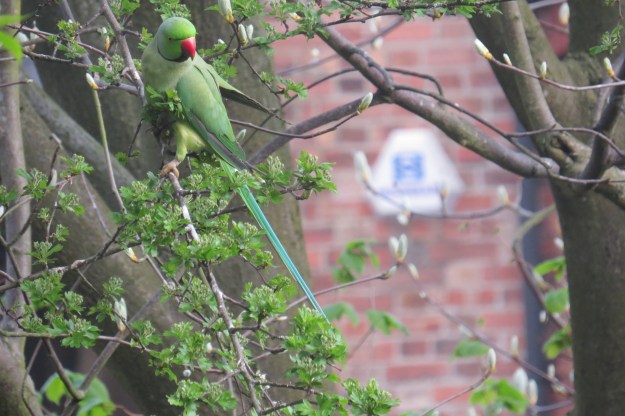
Seven – Rose-ringed parakeet (also known as ring-necked parakeet) (Psittacula krameri)

Eight – Grey heron (Ardea cinerea)

Nine – European blackbird (female) ( Turdus merula)

Ten – Female chaffinch (Fringilla coelebs)

Eleven – Woodpigeon (Calumba palumbus)

Twelve – Jackdaw (Corvus monedula)

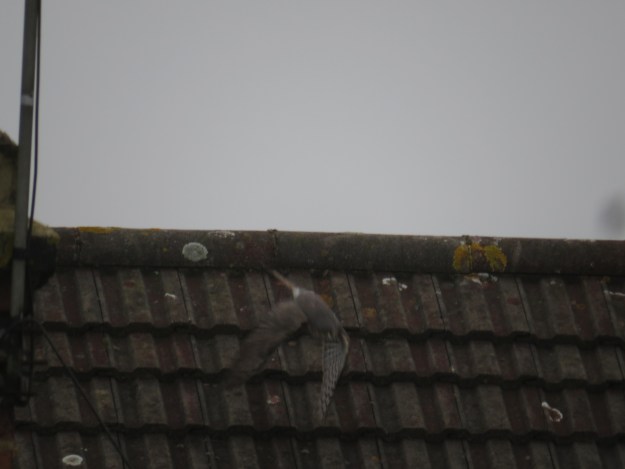
Thirteen – Eurasian sparrowhawk (Accipiter nisus)

Fourteen – Magpie (Pica pica)

Fifteen – Song Thrush (Turdus philomelos)

Sixteen – Siskin (Carduelis spinus)

Seventeen – Pied wagtail (Motacilla alba)

Eighteen – Greater spotted woodpecker (Dendrocopos major)

Nineteen – Robin (Erithacus rubecula)

Twenty – Blackcap (Sylvia atricapilla)

Twenty One – Wren (Troglodytes troglodytes)

And for bonus points, see if you can identify these: all the birds are pictured above.

22. Wren

23. Blackbird

24. Sparrowhawk

25. Jackdaw and wrens

26 – Blue tit

How did you all get on? Let me know if it was fun, and maybe I’ll do some more.


A British Garden Bird Quiz!

Dear Readers, to shake things up a bit I thought I’d do us a little quiz on British birds and their calls/songs today. This is just for fun: I will publish the answers tomorrow, but will give a special shout out to the first person to get all (or the largest number of) the answers right (just pop them into the comments).

So, for starters, what birds are these? All photographs are taken in my East Finchley back garden, and, just to make it more challenging, not all of them are my best work :-).

One

Two

Three

Four

Five

Six

Seven

Eight

Nine

Ten

Eleven

Twelve

Thirteen

Fourteen

Fifteen

Sixteen

Seventeen

Eighteen

Nineteen

Twenty

Twenty One

And for bonus points, see if you can identify these: all the birds are pictured above. All recordings are from the Xeno Canto website 

22. Who is singing their head off here?

23. Who is raising the alarm here?

24. Which bird makes this sad little call?

25. Who is responsible for this jolly call? You can hear one of our earlier bird calls in the background towards the end…

And finally, who sounds very cross here?

Have fun, and I’ll ‘see’ you on Tuesday with the answers, and a request for some advice from you proper gardeners out there….


Tadpole alert!

Dear Readers, what ever time of year we go on holiday, it always seems to be the wrong time. Last year we went in April, and 90% of our adult frogs were eaten by a heron. This year, we headed out on 13th March (remember the days when you could actually go on holiday?) and on the morning that we left, the frogs were mating  but in the shallowest part of the pond.

‘That’ll cause trouble, mark my words’, I thought to myself.

Ten days later and, as I feared, the long dry spell had caused the water level in the pond to drop, and many of the eggs had dried out. All I could see was a sad layer of jelly and the little black specks that would have been tadpoles smeared across the stones. It was one more sadness in the middle of a desperately sad time.

‘I think the frogspawn has failed, for the first time in ten years’, I told my husband.

‘You might still be surprised’, he said.

And,  when I got back from Dad’s cremation, I had another look in the pond, and discovered that life is rather more resilient than I thought.

Look at all these tadpoles! At the moment they are vegetarian, and are getting stuck into the algae on the rocks. Some of them appeared to be trapped in tiny rock pools, so I have rearranged some of the stones so that they have access to the main pond when they’re ready – we don’t have any rain forecast, and I don’t want to top the pond up with tap water if I can avoid it. Later on, when they get little legs, they’ll become tiny predators, munching up the  invertebrate life in the pond. I am a bit concerned that it’s still pretty bare around the edge following my major tidy-up last year, but I am trying to remedy that (more on this later in the week).

The replanted marsh marigold is doing very well too, and often attracts hoverflies.

And my water hawthorn is tentatively popping out a few leaves and a single flower.

The water, which went bright green after the work that I had done in January, is gradually clearing, and I hope that my oxygenating plants will soon be bouncing back. One thing I am definitely thinking about doing is planting some pale-coloured flowers like nicotiana by the pond to attract moths, which will also help feed the bats – we had at least three regular visitors last year, and I want to encourage them.

There is such solace in sitting in the garden and seeing what’s going on, even if the tadpoles are so full of activity that it isn’t exactly restful. They have only a short period of time to grow up, and lots of competition, so I don’t blame them for getting stuck in. And here they are, the tadpoles that I didn’t think I’d see this year. How they lift my spirits!


A Jumpy Visitor

Zebra jumping spider (Salticus scenicus.)

Dear Readers, in this time of lockdown it is usually delightful when someone from the outside world comes to visit me (though not if the visitor is a mosquito) and so I was very pleased to see this jumping spider advancing along the edge of my desk. Jumping spiders are able to see the outside world in a way that other spiders don’t and so, although I did my best to get a decent photo of this spider, s/he kept edging away to the other side of the desk if I got too close. At one point s/he peered over the edge with just two enormous eyes showing. I can see why some arachnologists consider them their favourite spiders.

Jumping spiders and I go a long way back. Imagine, if you will, a pocket-hanky sized garden at the back of a tiny house in Stratford, East London. A six-year old girl is laying on her stomach in her best party dress, for which she will get ‘a right old telling-off’ in a few minutes, but she doesn’t care, because all her attention is focused on a jumping spider a few inches in front of her nose. The spider is crouching behind a tiny crenelation in the concrete slab that holds up the fence, and it is paddling its legs just like her cat does before she pounces. A fly is washing her hands a few inches away, and then starts to ‘clean behind her ears’, rotating her head a good 180 degrees on the string-like neck.

And then, the spider springs into the air and lands on the fly.

Truly, I (for it was me) had never seen anything so thrilling in my entire life. You could keep the lions of the Serengeti – who knew that such life and death struggles were going on in a city back garden? I  watched as the fly struggled, and then leapt up to go indoors to tell my parents what I’d seen. Sadly, they were less impressed with the spider, and more horrified that I’d now have to be positively hosed-down before I was fit to be presented to my grandmother.

And yet, that one incident opened my eyes to the sheer abundance of fascinating events and creatures that were right there, waiting to be experienced. I honestly believe that my love of nature and the natural world became turbo-charged in that moment – I had always preferred books about animals to books about people, but now my whole focus turned to the garden and what was living in it. No wonder that in these times of lockdown, I am finding my focus both narrowing and deepening, and I suspect that that’s the case for others, too.

Female zebra jumping spider (Public Domain)

One thing that makes the faces of jumping spiders so much more appealing to humans that those of other arachnids are those huge front-facing eyes. To the side and just above are two smaller eyes – these give the spider its peripheral vision, and enable it to detect its prey. Those enormous front-facing eyes enable it to lock on target, but also mean that it can see the movement of, say, a large late-middle aged female wafting a camera about. No wonder they seem to interact with us much more than most invertebrates.

It is also the case that jumping spiders appear to capable of learning: an experiment taught the spiders to associate a food reward with colour or location, and they quickly picked up where the tastiest titbits could be found. When the placements and colours were reversed, they soon unlearned their previous associations and formed new ones. Furthermore, the spiders, in the words of the scientists,

show differences in their learning success and in their preference of which cues they used (colour vs. location) as a reward’s predictor’

In other words, these tiny creatures, with brains smaller than a poppy seed and a life span of only 1-3 years, have intelligence and personality.

Experiments have also showed that jumping spiders are very interested in one another: in one test, they were more fascinated by one another than by a delicious food item being dragged past on a tiny cart. I shall hold that image in my head for quite some time, I must say. There is even some evidence that they can learn from watching the behaviour of other spiders. If we really paid attention to the little creatures around us, we would probably learn some extraordinary things.

Photo One by By Fotonfänger - Own work, CC BY-SA 4.0, https://commons.wikimedia.org/w/index.php?curid=11135039

Perky jumping spider (Photo One)

I love how alert these creatures always seem to be, as if they are spring-loaded. Their Latin species name means ‘theatrical dancer’. They can jump at a speed of up to 2.6 feet per second, not bad when you consider that they are about the size of my little fingernail. The power to jump comes from a change in their body pressure, which results in the  fourth legs suddenly straightening, sending them flying into the air.

The love life of a jumping spider involves the male doing an energetic courtship dance, involving  waving the front legs and waggling the abdomen up and down. If you want to see the courtship display and mating of two North American jumping spiders, there is a rather nice video here. I listened with the sound down to avoid the usual silly music and cliched voice-over, but you may have a higher tolerance than I do.

Photo Two by Alexander Wild at alexanderwild.com

Photo Two by Alex Wild

These tiny tigers can be found all over the place at the moment: in East Finchley, they seem to like warm, south-facing walls, and I often greet one who lives beside my front door. If you want to meet a spider who truly ‘looks you in the eye’, this is definitely the one. And finally, for those of you with a very, very high tolerance for cuteness, have a look at this animation of ‘Lucas the spider’. You’re welcome.

Photo Credits

Photo One by By Fotonfänger – Own work, CC BY-SA 4.0, https://commons.wikimedia.org/w/index.php?curid=11135039

Photo Two by Alexander Wild at www.alexanderwild.com


Saying Goodbye

Dear Readers, some of you have been following the story of my parents’ last years since way back in 2016, when my Mum was taken into hospital while she was staying with me in London, so it seems appropriate to bring you with me to closing of the chapter. Dad was cremated yesterday in the crematorium at Weymouth, on a glorious spring day. This is not an occasion that you want to be late for, especially when there will only be two mourners actually at the event (my brother was self-isolating with a fever), and so we were there an hour early. It was so peaceful in the crematorium grounds: the only sounds were the cawing of crows in the cypresses, and ‘Ride of the Valkyries’ which was chosen by the previous party as their music for saying goodbye. How idiosyncratic these choices are! I don’t know what anyone who didn’t know Dad would have made of ours (of which more later).


You would not have to ask from which direction the prevailing wind blows in the cemetery – every tree, every sapling, is leaning decidedly to the left. I idly wonder how some of them are standing up at all. Trees have a lot of sense, though: they ‘know’ that they need to adapt or get blown over, and so they sacrifice perfection for survival. This may be a metaphor.

I watch as the coffin bearing the next person to be cremated is driven to the door, and then the hearse drives away. At 1.30 it returns with another coffin. This one contains the earthly remains of my dear old dad. Of course, he isn’t actually here: that much was clear within a few moments of his death. The carer and I both went to the window to open it, as if to let his spirit out, just as I’d felt compelled to do when Mum died.

I had to get up and take a quick walk to regain a vestige of composure, and I found myself under those cypresses. People who are grieving are strange, otherworldly creatures who do peculiar things, and so it was that I found myself touching the trunk of one tree, almost as if I expected it to be breathing. It took me back to when I lay my hand on my Dad’s stilled chest, but at the same time it reminded me of when he was alive, this big, solid, reliable man, as dependable as a great tree. And I found myself taking off my shoes and standing in the grass, toes among the daisies, as if rooting down into the soil. Such a feeling of peace came over me, as if I was being held, and maybe I was, though by what or who I cannot say.

And then it was time. There are so many restrictions around the rites for the dead at the moment – no more than ten people, hand sanitizer as standard, no hugging people from other households. And yet, as we walked in to Concerto de Aranjuez (Adagio), to honour Dad’s love of Spain (and also the way that he used to whistle along with less than complete accuracy), I could feel all the people watching the webcast from home – Dad’s sisters and their families, some of my friends, and of course my brother – and it was comforting in a way that I hadn’t expected. The vicar’s eulogy managed to catch the essence of Dad in all his variety. And when we walked back out into the sunshine, to the sound of the theme tune to ‘Last of the Summer Wine‘, I felt as if we had done the best that we could for Dad, for now. 

Some of the peace of the day stayed with me as we started on the long trek home. It may not last, but then nothing does. My brother and I have often coped with the last few years by using humour, and this week we were remarking that we were orphans, but not the wide-eyed, sad Dickensian variety. Which kindly benefactor will adopt us, I mused, since we are grey-haired (and getting increasingly more so), old and a little on the podgy side? A friend of mine had the best answer:

‘Nature seems to be your nearest kindly benefactor’ she said.

And so it is.

When the Lockdown is Over…

Rockpool, photo by Claire Pegrum

Dear Readers, what do you find yourself dreaming about during the lockdown? I have found my mind going to some most peculiar places. For example, when I was a child I loved messing about in rockpools – I have never been one for laying about on a beach, but give me a fishing net and a jam jar and I’m there (all creatures are returned to the pool after inspection of course). How I remember that seaweedy smell, the salt in my hair, the slight tingle of incipient sunburn (there was no Factor 50 in those days). I find myself daydreaming about the way that the sea anemones turned from boiled sweets into medusas as the tide came in, and the prickle of the feet of the little crabs that I used to pick up. How I loved the dart of the little shrimps, and the many tiny suckers on the undersides of the star fish! Every rockpool seemed to be a treasure trove of delights, inexhaustible. It has been a long, long time since I went rockpooling, but when this is over, I shall head out again, barefooted on the slippery rocks, trying to avoid the barnacles.

And then there are the things that I’ve never seen that I find myself aching to see.

Photo Two by Svein-Magne Tunli - tunliweb.no / CC BY-SA (https://creativecommons.org/licenses/by-sa/4.0)

Northern Lights (Photo Two)

Mum always wanted to see the northern lights, and before she got very sick we were trying to sort out a Norwegian cruise so that she and Dad could see them. I realise now that I was kidding myself, and that Mum and Dad were humouring me: I got a bit frustrated that no cruise ever suited, but I think they knew in their heart of hearts that they weren’t well enough to go. But now I have such an urge to jump on a boat in the middle of winter and head north: maybe I think that, wherever Mum is, she’ll be able to see them through my eyes. Whatever the reason, I find myself thinking about those great curtains of light dancing across the sky, and my heart yearns.


Rather closer to home, I want to go back to St Pancras and Islington Cemetery, currently closed to the public. Rumour has it that it was closed following a barbeque and some sunbathing at one of the graves, that involved the police being called. Whatever the reason, it is now out of bounds unless you are attending a funeral or cremation, so I am missing the emergence of the young foxes, who will just be starting to explore the world – before it closed, a friend of mine told me that she’d seen no less than four young foxes cavorting around the graves. It’s so frustrating! But I shall have to make do with the photo above of a particularly confiding young vixen back in 2016. Isn’t she gorgeous?

Photo Three by kloniwotski / CC BY-SA (https://creativecommons.org/licenses/by-sa/2.0)

London (Photo Three)

And how I miss my city. I miss the museums and the art galleries and the theatre. I miss going to the cinema. But most of all, I miss just mooching around, walking along back streets that I’ve never experienced before, looking out over the Thames, finding little patches of green that I didn’t know existed. For all her messiness and noise, she is in my blood. My husband says that London is a disease that you have to leave to get over, and I know what he means. I have loved spending time in the peace of Dorset, but something always draws me back here.

And speaking of the delights of London:

Photo Four by RachelH_ / CC BY (https://creativecommons.org/licenses/by/2.0)

Daunt Books’s famous gallery (Photo Four)

Photo Five from https://www.londonreviewbookshop.co.uk/gallery?gallery=christmas-windows

London Review of Books bookshop (Photo Five)

I love these two bookshops with a passion. Daunt Books, on Marylebone High Street, specialises in travel books, and I love the way that they arrange all the books for a particular country or region in the same space. So, for Austria for example, you will have guidebooks to Vienna, walking guides for the Tyrol, Austrian recipes books full of kaiserschmarren and sacher torte, and novels by Elfride Jelinek and Robert Seethaler. Incidentally, can I recommend Seethaler’s 2016 novel ‘A Whole Life’? Maybe I’m biased because I’ve spent so many weeks in the Austrian Alps, but I found it a useful insight into the history of the mountains, as seen through the life of one man in a Tyrolean village.

The London Review of Books bookshop on Museum Street, close to the British Museum is, as you might expect, full of books on politics and economics, along with unusual works of fiction and an interesting selection of science and natural history books. Plus, it has a cafe with homemade cakes, and that’s hard to beat. The staff are every bit as quirky and interesting as the books, and really know their stuff. Pop in if you’re in the area and you’ll see what I mean.

And of course, I miss all the little things: having coffee with a friend, going out for breakfast with my husband, going to my pilates class, popping to the garden centre. But how easy it has been to take all these things for granted, and how wonderful it will be to be able to do them again! For some people I know that just being able to get back to work will be a huge relief. I never thought that I’d miss commuting, but how great it will be to jump on a train and go into the office to see my colleagues in the flesh when all this is over. There will be some re-evaluation of what makes life worthwhile for all of us, I think. It will be fascinating to see how long the effects of the lockdown last, and what decisions we make about our futures. We are certainly living through history, and it will be interesting to see what has changed when we step, blinking, into the big wide world again.


A Whole Life

Tom Palmer in his early thirties, with our Ford Consul Sunshine

Dear Readers, by the time you read this, I will be on my way to Weymouth Crematorium, to say goodbye to Dad. Even two weeks after he died it still seems impossible that I am writing these words, and I keep expecting to wake up and find out it was all a nightmare. I am reminded that when we first started to discuss the nursing home for Mum and Dad, she would look at me and ask ‘Am I dreaming? Are we really having this conversation?’ and I wasn’t altogether sure myself.

But yes, this is real, and tomorrow will be the end of Dad’s physical form on this earth. He was always such a big presence, and so at ease in his body, unlike the rest of us: Dad prided himself that he could still beat us in a straight sprint until we were in our early teens, and he liked nothing better than to take his shirt off and get some sun on his back. He was a very attractive man, and yet he didn’t seem to know it: Mum’s friends were always telling her how lucky she was to have him, which was a cheek as she was utterly gorgeous as a young woman too. Right up until the end of his life, women loved my Dad: his key nurse at the home told me that he was ‘always a gentleman’, and he loathed any man who didn’t treat women with the respect that they were due.

Dad and Bugwoman on her wedding day in 2001.

Dad and I shared a sense of humour, and I loved how dry he could be. He often could barely contain his amusement at the idiosyncrasies of other folk, and I suspect that we are having a bit of a giggle about some strangeness that is going on at the wedding. This served Dad in good stead at the nursing home, because he never lost his notion of the absurd. He would often shake his head and tell me how confused someone else was, this from a man who thought he was on a cruise ship. When we were growing up, my Dad and I used to love The Goon Show, which Mum loathed, because she could never understand why it was funny. As a teenager I got into endless rows with Dad about the Benny Hill Show, because I said it was misogynistic, and Dad just thought it was funny. I was so enraged about the many things that were wrong in the world that Mum must often have dreaded opening her mouth, but Dad ploughed on anyway. In fact, he was quite fond of saying something contentious and then standing back as I flew into spluttering fury. It wasn’t until I noticed the little smile on his face that I realised that I’d been played.

Dad at the Marina close to Minneapolis

When he was younger, Dad was the most easy-going man that you could meet. Mum was the Designated Worrier, and Dad was always the one to calm her down. But later in life, this changed. Not long after my marriage, Dad developed an obsession about the car, and about parking. He once came to visit us in Islington, close to where he used to work as a gin distiller, and he spent the whole lunch worrying about how he was going to get home again.

‘They’ve moved all the roads since I was here last’, he said.

Now, I wonder if the damage to Dad’s memory that was going to lead to his dementia had already started as long as twenty years ago.

Dad and Mum’s trip to see Mum’s cousin in Minneapolis was to be their last long distance trip. Not long after this, Dad had a stroke, and soon after that both his lungs and his heart started to fail. Being a life-long smoker, he developed COPD, what used to be called emphysema, and his heart’s irregular rhythm was corrected with a pacemaker. Those of you who have followed this blog for a while will know that for the past five years life has been one emergency after another, with Mum and Dad in and out of hospital, on and off of antibiotics and steroids. Whenever Dad had an infection, he would become ‘confused’ – during one hospital stay he kept standing up and trying to ‘go to the shop’, in spite of being connected to a canula, a catheter and various monitoring devices. It was the first time that my mother and I had ever seen him like this, and I remember the cold sweat running down my back as I tried to persuade him to sit down. Later it transpired that after we left he had pulled out his canula leading to a spectacular bloodbath. It foreshadowed what would happen to Dad when he went into the hospital for the last time. In effect, it ended any attempt to give him the intravenous antibiotics that might have saved him.

Dad and Bugwoman in the bluebell wood near Milborne St Andrew

Every time Dad had a chest infection, his ‘confusion’ got worse. Sometimes, it cleared up and he seemed more lucid. It was clear that he was getting worse however. A couple of years before he died, he came home after a hospital stay, and he didn’t know who Mum was. He wasn’t sure if she was his Mum, or some random elderly lady who just happened to be staying in his house. Mum was heartbroken.

‘Do you think he thinks I’m his Mum because I look so old?’ she asked me.

When Dad was diagnosed with vascular dementia, it came as no surprise to anyone. The news was delivered in the nursing home by a very compassionate consultant. Mum heard the diagnosis, and I have a feeling that it was then that she decided to let go.

‘He had such a magnificent mind’, she said. ‘He was my rock’.

In spite of his dementia, Dad was still determined to make Mum happy. Mum wanted to go home when she first went into the nursing home (although she changed her mind later), and Dad latched on to that. I remember him sitting on the bed, gathering all his patriarchal authority, in spite of the fact that his shirt was done up wrong.

‘I think we should get your Mum home, and then she’ll be well again’, he said, his hands shaking.

‘Oh Dad’, I said, ‘If Mum goes home, she’ll just go straight into hospital’.

‘You’re wrong’, he said vehemently.

And all I could do was go outside the room and cry.

After Mum died, Dad went through a period of looking for her, though if you’d asked him he couldn’t have told you what he was doing. I think he just knew that something was wrong. But then, gradually, he settled in to the routine at the home, and somehow he seemed more like the Dad that I used to know: pragmatic, laid-back, wryly amused, mischievous. He was enjoying his life, and I am heartbroken that he didn’t get to have a bit longer to eat pie and mash, to sit in the sunshine and to plant out some little seedlings from the garden centre, handling them so gently with his big, brown hands.

The photo below is Dad as I remember him best – tanned, relaxed, at ease with himself. It was taken in Spain, which is the country that he loved most in the world after England. Like the people who are currently not being included in the Covid-19 statistics because they died in care homes, Dad had lived a full and interesting life and was still making the people around him happy. I heard Dorothy Duffy’s eulogy for her sister, who died from coronavirus, on Radio Four last week, and one sentence has stuck in my head.

‘Her underlying conditions were love, kindness, belief in the essential goodness of mankind, uproarious laughter.

Forgiveness, compassion, a storyteller, a survivor, a comforter, a force of nature and so much more.’

My Dad had a multitude of underlying conditions that contributed to his death, but that doesn’t make him in any way less deserving of grief, or worthy of remembrance. A community that doesn’t make space for everyone is not a community. Maybe this time will teach us how deeply dependent we are on one another, how intricately linked. When someone dies the reverberations in the web of life are felt a long way from the centre.

Rest in peace, Dad.

Thomas Reginald Palmer (5.12.35 to 31.3.20)

Blossom

Magnificent Kanzan cherry tree at the bottom of Durham Road, East Finchley on Sunday

Dear Readers, when we awoke this morning the temperature had dropped by twenty degrees Fahrenheit, and the wind was whistling in the chimney. I thought about putting a hat on before my daily walk to exercise, and was sorry that I hadn’t when the chill blast insinuated itself into my inner ear. Still, I was determined to see what was going on on my patch, and today I decided to tune into blossom because, with this wind, a lot of it was  likely to be gone by tomorrow.

I had been particularly taken by the cherry tree above. It was positively laden down with candy-pink, puffball flowers. The photo above shows it on Sunday.

By Monday, it looked like this: you can see some of the areas where the green leaves are showing through.

Cherry blossom today

And the pavements look as if there has been a wedding.

Incidentally, Durham Road also has one of my favourite, favourite trees, which I am slipping in here even though it’s its leaves, not it’s blossom, that makes it so gorgeous. I love the way that the colour shades from crimson to coral.

Japanese acer on Durham Road

But as usual I digress.

Our street on the County Roads has a variety of very pretty street trees. This is a crab apple that produces a whole mass of fruit in the summer, and turns golden and red in the autumn. Not bad value for a single tree, plus the parakeets sometimes strip its blossom.

Further down the street there are two striking pink crab apple trees: these might be of the old variety ‘Purple Crab Apple’ (Malus x purpurea), and at the moment they are spectacular.

Purple crab apple

Incidentally, if you live in London and want to know about your street trees, the London Street Trees map will give you a reasonable idea of what’s what (though not the individual cultivars, and some of the trees are irritatingly described as ‘other’ which is not abundantly helpful). You can access it here. Just enter your postcode, and away you go! Might be useful for an exercise session (but be careful of your social distancing, as always).

Off we go into the woods, and there are the wild relatives of some of these trees blossoming away. They may not be as fluffily-adorned as some of the ‘domesticated’ trees, but they have a delicate beauty all of their own, the pristine white flowers standing out against the crisp green foliage. Being in the wood at this time of year can feel like being at the bottom of the ocean: there is a strange otherworldly feel to it, even as we sashay past runners and children on scooters. There was a husky howling its head off as we strolled through this morning, and it reminded me that there were once wolves here, though a very, very long time ago.

The plant below, for example, is Midland hawthorn (Crataegus laevigata) – the leaves are much less deeply lobed than in the common hawthorn, and this is a plant of ancient woodlands and clay soils. Apparently, when those pretty flowers are cut they have such an unpleasant smell that medieval people said it reminded them of the stench of the Great Plague. It’s probably best to leave the flowers right where they are, especially at the moment. Hawthorn generally has a rather feral scent, and one wouldn’t want to encourage it to get any worse.

And what about this tree? Looking at the leaves, I am thinking wild cherry (Prunus avium): the flowers are so white that they glow in the semi-shade. Like a lot of woodland trees, this is a rather scrappy little chap, surviving in the filtered sunlight that comes from being slightly closer to the stream than many other trees.

And so we loop back and head for home. I cannot resist taking a photo of this goat willow catkin though: soon the bees will be all over it (though it will need to warm up a bit first).

And look at this splendid single paeony just waiting to erupt in a front garden close to the woods.

I don’t know about you, but being in lockdown seems to have heightened all my senses, so that I am primed to notice the changes that happen every day in my immediate environment. It is a real privilege to be able to go out at all, and walking the same routes on a regular basis reminds me of the pleasure that there can be in observing a local ‘patch’ in all weathers. I am waking up to the delights of slowing down, and of making the most of a bad job. Dad was a very pragmatic man. I can see him now, shrugging his shoulders and settling back into his recliner with a cup of tea and the TV remote, ready for a Last of the Summer Wine marathon. He always reminded me a bit of a cat, ready to curl up in the sun and disinclined to get excited unless there was something worth getting excited about. I could learn a lot from his example.


The Dance of Two Metres in Coldfall Wood

Sign at the entrance to Coldfall Wood

Dear Readers, time was that a walk in Coldfall Wood would involve a gentle stroll, with me pausing every five minutes to take a photo of something or other. Not now! In the UK we are allowed out once a day for exercise, but all that loitering business is definitely frowned upon. After all, we are all trying to preserve this business of being two metres apart from people who aren’t part of our household, and that’s difficult enough when everyone is travelling at the same pace.

What a dance the good burghers of East Finchley are currently performing! There’s a step to the left, and then a step to the right, usually involving getting off the path to avoid a runner who is puffing energetically along. The biggest hazard, however, is people looking at their phones, oblivious. It would be very easy to become a curmudgeon (and I have tendencies in that direction as we know), but a piece of advice that I read at the start of all this shenanigans has stood me in good stead. It suggested that I am only responsible for my own social distancing, and that there’s little I can do about people who have other ideas about it. So true! I make sure that I step off the path or take the other route, because it costs me nothing, and it might keep both me and the other person safe. I have a suspicion that chaps might find this more difficult, as there is a definite dominance game played on the pavement at the best of times – what do you think? I know that women are not immune to this kind of gameplaying, but in my experience, a lot of blokes naturally take up as much space as they can, as if they are entitled to it. And I know that it’s not just women who are affected by ‘manspreading’ on the tube, for example – other men are as well.

Anyhoo, off I go into the woods, making sure to preserve not just my horizontal distance but my vertical distance as well, as instructed.

Gosh, two metres is quite a distance, isn’t it? I think if my husband fell flat on his face he’d be about two metres, so this makes it relatively easy to envisage (not that a tumble is desirable, obviously).

But how beautiful the woods look. The marsh marigold is just coming into flower along by the culvert, although it’s been extremely dry for the past few weeks, and the river is reduced to a trickle.

The crows are delighted though – there is a ‘secret’ spot in the woods where the crows go to bathe, and until recently the  whole area was flooded. Not anymore, though, and the birds are back.

I am loving the way that the hornbeam leaves are bursting through, so fresh and green. They look as if they are getting bigger every day, and I’m sure they are.

Hornbean leaves

At this time of year, you can clearly see the structure of the standard oaks that were planted many years ago. As you might remember from previous posts, Coldfall Wood is an ancient wood, where hornbeam was planted around an oak (a forestry method known as ‘coppice and standard’). The hornbeam would be cut back every year for kindling and charcoal (there are the remains of an old charcoal pit in one corner of the wood) but the oak would be allowed to grow for up to a century, at which point it would be cut down, and the wood would normally go to the Lord of the Manor. The oaks have magnificent full crowns, but at some point the tree will no longer be able to pump its sap all that way, and the top branches will die, with the crown retreating to a point lower down, giving us a ‘stag-headed’ oak. I will have a look next time I’m in the woods to see if any of the trees have reached this point, but for the moment have a look at these beauties.

Everything comes to an end, however, and there are a few enormous fallen trees in the wood. They always remind me of some kind of prehistoric monster, lurking in the undergrowth. We had a few bouts of very high winds during the winter, and maybe they were the final straw. Dead wood is normally left so that it can break down naturally, and provide a home for all kinds of beetles and other insects.

And so we circumnavigate the wood, waving hello to people as we dance around them, admiring dogs from a distance and listening to the parrots being rambunctious. It seems to me that pretty much everyone around here is doing their best under very difficult circumstances, and most people have now gotten the memo about what they’re meant to be doing. One thing this past few years has taught me is that it’s so important to take a breath and choose the kinder option – you never know what people are going through privately.

And, when I walk back along Creighton Avenue, I notice that two pigeons are happily ensconced in a nest in the eavestrough of one of the houses. It looks almost as if they’ve built a substantial nest, which would be unusual because, as we know, pigeons normally just throw a few sticks down and call it home. Maybe the plant was growing in the gutter already, and they are taking advantage? At any rate, they looked very content, and I thought I heard the tiny wheezing call which indicates that a happy event has occurred. Hooray for life! It seems to be popping up everywhere.