Dear Readers,
A year ago today, I created my first ever blog post for Bugwoman’s Adventures in London. At that time, I had no idea what I was doing, except that I had a passion for my local wildlife, and wanted to write about it, so I set myself the task of investigating the creatures that lived within a half-mile of my North London house. I wondered if anyone else was interested in the overlooked, under-reported animals that inhabit our gardens, our streets and sometimes even our houses.

Woodlouse galloping over the duvet
In a world where the creatures and plants that live with us have so often been pushed to the margins, it was a relief to see that they are not going quietly. Once I started to pay attention (and of course I had to, because I needed something to write about), I found animals everywhere. There were foxes, frogs and snails in the back garden.

The Gardener’s Friend

A very confident fox hoovering up the suet pellets from the bird table
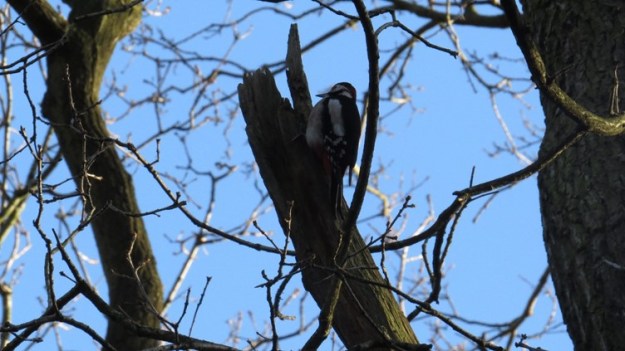
There were mistle thrushes on the local playing fields, and crows, parrots and woodpeckers in the tiny remnant of local wood around the corner.

Ring-necked parakeet setting up house

Crow bathing in Coldfall Wood
Jays stole the peanuts that I’d intended for the tits, and finches ate a 25kg bag of sunflower seeds every month.

Goldfinches
There were damselflies and butterflies, Spanish slugs and froghoppers, early bees and leafcutter bees.

Red Admiral on Ivy

Leaf Cutter bee on Elecampane in the garden
To begin with, I concentrated on writing, but soon I discovered that I wanted to photograph the creatures that I saw, to put together word and image. I grew to love sharing the sounds of nature with the people who read the blog, and even experimented with video. It fulfilled a deep need in me, but also seemed strangely familiar. And then I remembered why.
When I ten years old, I was in charge of the nature table at school. Do schools even have nature tables these days, I wonder? It was always full of bits and pieces that the children had found, acorns and feathers, seashells and stones, even, in pride of place, a shrew’s skull. But this wasn’t enough. I created a weekly nature magazine, eight pages every week, full of competitions and animal stories and accounts of creatures spotted. The other children read it mainly, I think, for the bars of chocolate that I bought with my pocket money to offer as prizes, but for me it was a chance to share what I had discovered with anyone who would listen.
“Look”, I wanted to say. “Isn’t that extraordinary?”

The trunk of the Totteridge Yew, over 2000 years old and still going strong
It isn’t enough for me to know something, or to have seen something. I need to share it, to help other people to see it, to hear about what’s going on in their gardens or parks. I want to be told stories too, and so often that’s what I get. A fox or a robin or a magpie shared, sometimes across continents, knits a community that does see, does care. Mine is not the only heart to leap at the sight of a heron, or at the sound of the first frog-song from the pond.

But the real revelation for me this year has been the Wednesday Weed.

Yarrow
I started off knowing very little about the plants that grow in my neighbourhood – there were maybe a dozen that I could identify by sight. So, when I started writing about them, I thought that it would be a short-lived phenomenon. But instead, I realised that I was falling in love with the diverse, often scruffy, always overlooked plants that were everywhere around me. Like Londoners, they came from every corner of the world. Like Londoners, many of them were scratching out a living in the poorest of habitats, but surviving nonetheless. And like people everywhere, each species had its legends, its history and its place in the fabric of things. I loved unearthing the strange and wonderful stories of Herb Robert and White Deadnettle, of Groundsel and Yarrow, of Feverfew and Cuckoopint. It made me humble to realise how little I knew that would have been second nature to my recent ancestors. It reinforced my sense that so many people are alienated from the world around them, including myself. But it filled me with a kind of joy that it was so very easy to find out about the plants, to start to know them.

White Dead-nettle (Lamium album)

Trailing Bellflower

Pineapple Weed
There is still something of the Ancient Mariner about me as I grab passers-by to encourage them to look at some bird or plant that I’ve found. An unfortunate young man got out of a council van outside a derelict house last week, only to have me inform him that the patch of Annual Mercury in the front garden had both male and female flowers, and, look, this is how you told them apart.
“Cool”, he said, in a way that made me think that perhaps he was either very slightly interested in what I’d told him, or very polite.

Annual Mercury (Male)
The mood of the media is unrelentingly negative. I don’t have to watch it for long before I feel my anger and grief turning to helplessness and depression. What, after all, can ‘ordinary’ people do? Fortunately, ‘ordinary’ people are not ordinary at all. ‘Ordinary’ people get off their backsides and save the local woods that they love. ‘Ordinary’ people put up bird feeders, grow plants for pollinators, protest, sign petitions, fight for their communities. Only today, a report showed that urban gardens provide a haven for bees and other pollinators, and have more species than farmland. An indictment of farmland, to be sure, but how heartening for anyone with a garden or a window box or space for a container, no matter how small! Writing the blog has shown me how many people, all over the world, are noticing, caring and acting. Let’s not be downhearted, dark as things often seem. A lot of people, doing small things, can change everything.


![Grey Heron in flight (By Charlesjsharp (Own work) [CC BY-SA 3.0 (http://creativecommons.org/licenses/by-sa/3.0)], via Wikimedia Commons)](https://i0.wp.com/bugwomanlondon.com/wp-content/uploads/2015/02/grey_heron_in_flight_ardea_cinerea.jpg?ssl=1)


![Female flower (to the left) with fruits (By Olivier Pichard (Own work) [CC BY-SA 3.0 (http://creativecommons.org/licenses/by-sa/3.0)], via Wikimedia Commons)](https://i0.wp.com/bugwomanlondon.com/wp-content/uploads/2015/02/mercurialis_annua-femelle_bray-sur-somme_80_25062007_3.jpg?ssl=1)


![Male Bullfinch (By Mark S Jobling (Mjobling at English Wikipedia) (Transferred from en.wikipedia to Commons.) [Public domain], via Wikimedia Commons)](https://i0.wp.com/bugwomanlondon.com/wp-content/uploads/2015/02/bullfinch_at_pennington_flash.jpg?ssl=1)


![Germander Speedwell in flower (Tony Atkin [CC BY-SA 2.0 (http://creativecommons.org/licenses/by-sa/2.0)], via Wikimedia Commons)](https://i0.wp.com/bugwomanlondon.com/wp-content/uploads/2015/01/germander_speedwell_-_veronica_chamaedrys_-_geograph-org-uk_-_171750.jpg?ssl=1)

![The white centre of the plant gives rise to several of its alternative names (© Nevit Dilmen [CC BY-SA 3.0 (http://creativecommons.org/licenses/by-sa/3.0) or GFDL (http://www.gnu.org/copyleft/fdl.html)], via Wikimedia Commons)](https://i0.wp.com/bugwomanlondon.com/wp-content/uploads/2015/01/birds_eye_germander_speedwell_veronica_chamaedrys_1000821_nevit.jpg?ssl=1)


![Male Great Spotted Woodpecker (By Ken Billington (Own work) [CC BY-SA 3.0 (http://creativecommons.org/licenses/by-sa/3.0)], via Wikimedia Commons)](https://i0.wp.com/bugwomanlondon.com/wp-content/uploads/2015/01/great_spotted_woodpecker_dendrocopos_major_2.jpg?ssl=1)
![Juvenile Great spotted Woodpecker (By Jason Thompson (Flickr: Great Spotted woodpecker (juvenile)) [CC BY 2.0 (http://creativecommons.org/licenses/by/2.0)], via Wikimedia Commons)](https://i0.wp.com/bugwomanlondon.com/wp-content/uploads/2015/01/great_spotted_woodpecker_juvenile.jpg?ssl=1)