Sunday Quiz – Aliens!

A Martian in Woking (Photo by Colin Smith ) This is a metal sculpture, based on H G Well’s book ‘The War of the Worlds’

Dear Readers, you might read a lot in the UK papers about ‘invasive aliens’, but would you recognise one if you tripped over it? Below are photos of some of the animals that the UK government is getting most worked up about. Most of the larger animals have been deliberately introduced into ponds or gardens or private wildlife collections, but have found the UK very much to their liking. The invertebrates are a bit more audacious, and have turned up without any invitation at all! Climate change is making our environmental conditions more conducive to many creatures, so who knows what will turn up next?

Answers in the comments by 5 p.m. UK time next Friday please (17th September), and the answers will be posted on Saturday 18th. I will hide your answers as soon as I see them, but write them down first before you open the comments if you’re easily influenced (like me).

Onwards!

Photo One by Bouke ten Cate, CC BY-SA 4.0 <https://creativecommons.org/licenses/by-sa/4.0>, via Wikimedia Commons

1.

Photo Two by Ryzhkov Sergey, CC BY-SA 4.0 <https://creativecommons.org/licenses/by-sa/4.0>, via Wikimedia Commons

2.

Photo Three by Lilly M, CC BY-SA 3.0 <https://creativecommons.org/licenses/by-sa/3.0>, via Wikimedia Commons

3.

Photo Four by Prue Simmons, CC BY 2.0 <https://creativecommons.org/licenses/by/2.0>, via Wikimedia Commons

4.

Photo Five by Bernard Spragg. NZ from Christchurch, New Zealand, CC0, via Wikimedia Commons

5.

Photo Six by By Andreas Trepte - Own work, CC BY-SA 2.5, https://commons.wikimedia.org/w/index.php?curid=788401

6.

Photo Seven by By Rhondle - Own work, CC BY-SA 3.0, https://commons.wikimedia.org/w/index.php?curid=16504721

7.

Photo Eight by Charles J. Sharp, CC BY-SA 4.0 <https://creativecommons.org/licenses/by-sa/4.0>, via Wikimedia Commons

8.

Photo Nine by Dieter Florian (To contact the author, ask the uploader or take a look at tauchshop-florian.de.), CC BY-SA 3.0 DE <https://creativecommons.org/licenses/by-sa/3.0/de/deed.en>, via Wikimedia Commons

9.

Photo Ten by Liquid Art, CC BY-SA 4.0 <https://creativecommons.org/licenses/by-sa/4.0>, via Wikimedia Commons

10.

Photo Eleven by David Perez, CC BY 3.0 <https://creativecommons.org/licenses/by/3.0>, via Wikimedia Commons

11.

Photo Twelve by David Short from Windsor, UK, CC BY 2.0 <https://creativecommons.org/licenses/by/2.0>, via Wikimedia Commons

12.

Photo Thirteen by Charles J. Sharp, CC BY-SA 4.0 <https://creativecommons.org/licenses/by-sa/4.0>, via Wikimedia Commons

13.

Photo Fourteen by David Short from Windsor, UK, CC BY 2.0 <https://creativecommons.org/licenses/by/2.0>, via Wikimedia Commons

14.

Photo Fifteen by Kleuske, CC BY-SA 3.0 <https://creativecommons.org/licenses/by-sa/3.0>, via Wikimedia Commons

15.

Friday Quiz – Random UK Wildlife Facts! – The Answers

Title photo by Michael R Perry

Dear Readers, we had a tie for first place this week, with Fran and Bobby Freelove and Anne both getting 13 out of 15. I’m giving both you a half mark for saying 3 British mammals hibernate – if you include bats, though, you get up to  20 species. I’m also giving a half mark for King James’s birds – I was after peregrine falcon, but hawk is definitely in the right ball park. Thank you for playing, and let’s see what i can come up with tomorrow….

  1. What do we call a baby alpaca? A cria
  2. What is the most dangerous animal in England, in terms of deaths? The cow
  3. What is Britain’s fastest land mammal? The brown hare
  4. Which four groups of animals technically belong to the Queen? Swans, whales, porpoises/ dolphins and sturgeons
  5. What is a group of pheasants called? A covey, bouquet, nide , nye or head of pheasants
  6. Owls are zygodactyl. What does that mean? They have two toes pointing forwards and two toes pointing backwards.
  7. The puffin’s scientific name is Puffinus puffinus. True or false? False! Puffinus puffinus is the Manx shearwater. ‘Our’ puffin’s scientific name is Fratercula arcticus. ‘Puffin’ comes from an Old English word meaning ‘the fat tasty nestling of a shearwater’. 
  8. How many species of UK mammal hibernate (closest answer gets a bonus point!) Hedgehogs, dormice and all of the bat species, so 20 species in total. 
  9. Fieldfares and redwings migrate to the UK every year, but where from? Scandinavia
  10. Which UK thrush is named after its favourite food? The Mistle Thrush (named for its fondness for mistletoe)
  11. James II paid over a thousand pounds for a pair of which birds? Peregrine falcons, for hunting.
  12. Which species of bird, first seen in the UK in 1956, is now the 7th most commonly seen species? The Collared Dove
  13. What is Britain’s commonest bird of prey? The buzzard
  14. Which is the only UK snake that lays eggs? The grass snake – smooth snakes and adders give birth to live young. 
  15. The UK has only three native lizard species. Can you name them? Common and sand lizards and the slow worm. 


A Ninja Turtle?

A Wandering Turtle (Photo Credit Tristan Green/Ham and High)

Dear Readers, those of you of a certain age will remember the Teenage Mutant Ninja Turtle craze. The crime-fighting reptiles first appeared in a comic book in 1984, but have been resurrected occasionally ever since. The knock-on effect on real turtles, however, was not so benign – lots of people bought tiny terrapins as pets, only to discover that they grew to the size of a dinner plate, were extremely smelly if not cleaned out every day, and could be grumpy to boot. Many a terrapin disappeared into the local pond, where it set about eating frogs, toads, newts and even ducklings. I saw a very fine speciman sitting on a rock in the New River (Islington) a couple of years ago, so they can clearly also survive the winter.

The little chap in the picture below,  though, was found wandering around the field at Martin’s school in East Finchley.

(Photo Credit Tristan Green/Ham and High)

Very sensibly, the terrapin was put into the school’s pond (though I’m not sure what the rest of the pond population thought about it). Then, the turtle went walkabout again and gatecrashed a PE lesson. I wonder how much of a homing instinct these creatures have? S/he was clearly trying to get somewhere.

Eventually the terrapin’s owner appeared – they’d been on holiday and had known nothing about their pet’s escapade – apparently the animal has a perfectly nice pond at home, and that is presumably where s/he was headed.

The whole episode does make me think, though. Tortoises were a common and popular pet when I was a girl – my grandmother used to have a tortoise that would bang on the door with his shell when he wanted to come in from the garden, and would positively run across the floor at the sight of a strawberry. Children’s TV programmes such as Blue Peter featured a tortoise who would be ritually put to bed in a box filled with straw when it was time to hibernate. But such was the trade in the Mediterranean species who were the most commonly kept that the animals became endangered, and it’s now against the law to offer them for sale or trade them without a special permit. How often humans over-exploit the natural world and end up spoiling it!

Photo One by By Orchi - Self-photographed, CC BY-SA 3.0, https://commons.wikimedia.org/w/index.php?curid=1016717

A wild Hermann’s tortoise, one of the most commonly-kept European species prior to the trade ban (Photo One)

The other thing that always worried me about pets like tortoises and parrots is their extreme longevity. What happens to these much-loved creatures when their owners die, or can no longer look after them?  A puppy clearly isn’t only for Christmas, but a macaw or a tortoise can outlive a human easily. I know that people make provision in their wills, but I imagine that the transition, especially for a bird as intelligent as a parrot, must be extremely stressful and upsetting.

Still, at least the story of the East Finchley terrapin has a happy ending. I hope that s/he is soon back in the old, familiar pond, with a nice rock to sit on and lots of unsuspecting invertebrates to eat. And won’t they have some adventures to remember!

Photo Credits

Photo One by By Orchi – Self-photographed, CC BY-SA 3.0, https://commons.wikimedia.org/w/index.php?curid=1016717

The Much Maligned House Spider

Dear Readers, at this time of year many people become terrified of the spiders that suddenly seem to ‘appear’ in their gardens, sheds and, worst of all, their houses. I have every sympathy with arachnophobes, but I wanted to add in a few facts that might help those of us with a milder antipathy towards these fascinating animals to enjoy their autumns a bit more. These are fascinating animals with extraordinary life histories, and it’s possible to cohabit with them quite happily, as I know.

I recommend ‘Charlotte’s Web’ as a way of rehabilitating small children who are starting to develop a fear of spiders. It really works as a way of inspiring empathy and curiosity, surely great attributes for life.

Firstly, as far as the garden and shed goes, the spiders have been there all along, as spiderlings or eggs. We only start to notice them when they get big enough to see, and when they start flinging their webs at head-height across our paths. In the garden, the vast majority are Garden Cross Spiders (Araneus diadematus), easily identifiable by the ‘cross’ on their abdomen. Many of them are females, who will lay their eggs in the autumn and then die – they can grow up to 15mm long, but the pregnant ones will also look extremely fat.

Garden Cross Spider (Araneus diadematus) – probably a male

Garden cross spider – fat enough to be a pregnant female!

What seems to cause people the most trepidation, however, is the sudden sight of a house spider creeping along the skirting board. There are two species that you’re likely to see in the autumn: the large house spider (Tegenaria gigantea) and the common house spider (Tegenaria domestica). Both have very long legs, which is probably one reason why they give so many people the willies, but then the males in particular have to do a lot of running around, as we’ll see. The common house spider is similar to its ‘large’ relative, but is naturally a bit smaller, and according to my book ‘Britain’s Spiders – A Field Guide’, it tends to be paler, sometimes without those impressive tiger stripes on the abdomen. The common house spider is known as the barn funnel weaver in North America.

Giant House Spider (Tegenaria gigantea) by AJ Cann from https://www.naturespot.org.uk/species/giant-house-spider

The female is bigger than the male in both species. However, you are unlikely to see her (unless, like me, you tend to leave cobwebs in corners) – she makes a tube-like retreat which spreads out into a sheet, and there she waits for gentleman callers. In fact, if not wafted away with a feather duster, a web may be inhabited by several generations of house spiders, like an ancestral mansion out in the shires.

The males are looking specifically for a female who has not already been mated: they can tell if she’s receptive to their advances by pheromones that she secretes into her web. But life is extremely tough for a male house spider (you can tell that it’s a male by the ‘boxing gloves’ or pedipalps that are attached to their ‘jaws’, as in the photo above). They might get into fights with other males. They won’t eat, because they only have one thing on their minds. But they do get thirsty, and our homes are very dry environments – one reason why you often find the poor souls in the shower or bath tub.

When they find a female, they tug the web with their feet and fangs and  dance up and down, to make sure the female knows that they are male and the right species. If they mess this up, they could be dinner. If all goes well they will move in with the female for a while, and it’s not unusual to find a pair snuggled up together in the web. The male is waiting for the female’s final moult, when she will be ready to reproduce: those palps act like hypodermic syringes to inject her with sperm. Then the male may stay with her, guarding her against other males and mating with her frequently. Sometime in the winter, though, the male dies, leaving the female alone.

The female doesn’t lay her eggs until the following spring, and the young take 30-50 days to hatch. Right from the start they are formidable hunters, eating tiny fruit-flies to begin with but soon graduating to houseflies, bluebottles and house moths. Spiders don’t have to eat often, but they have a feast or famine approach, storing up the sad little corpses when there are lots of flying insects about so that they have enough for a rainy day. However, the availability of food when young does impact on the size of the adult spider, and being big both helps with the number of eggs that can be produced (in females) and in the ability to protect your mate from other males. This might be one reason why we sometimes see ‘monster’ spiders of a whacking 10 cms to 14 cms long, though I imagine my readers from other parts of the world are having a good old chuckle at this moment, especially anyone in South Africa or Australia, where the arachnids are decidedly more substantial.

So, the poor old house spider doesn’t have an easy life of it, and all it wants to do, as it scuttles out from behind the sofa, is to find a mate, reproduce and die. Incidentally, although escorting the spider outside is undoubtedly a better option than dropping a hot water bottle on the animal from a great height like my grandmother used to, it still isn’t very helpful for the spider. Male spiders only want to find a female of the same species, and these are usually living in your house or shed, so if he can find a way back in, I’m sure he will. Otherwise, if at night you hear the sound of a tiny guitar being plucked by one of 8 hairy legs as a lady spider is serenaded from outside your house, I hope you feel very, very guilty.


Wednesday Weed – Red Bartsia

Red Bartsia (Odontites vernus)

Dear Readers, this inoffensive little plant is my first ever member of the Orobanchaceae or Broomrape family, which includes a wide range of total and partial parasites. Bartsias are partial parasites – they can photosynthesise but they extract nutrients from the roots of other plants, grasses in the case of this species. Normally, these plants grow in nutrient-poor soil (hence the need to steal the resources they need from their hosts). These, however, were growing on a bridle path in Dorset, where you’d have thought that horse manure raining down would have provided everything that any plant could want (though judging by how overgrown the path was it would take a very intrepid rider to tiptoe through.

Red bartsia

Red bartsia is native to Europe and Asia, but has become a bit of a pest in North America. The Latin word ‘Odontites‘ means ‘tooth-related’, and the plant has been used medicinally for toothache since the time of Pliny the Elder. ‘Vernus‘ means ‘of the spring’, but this is something of a misnomer as the plant flowers in summer and autumn. ‘Bartsia’ comes from the botanist Johann Bartsch, who worked with Linnaeus and was sent to Surinam by his mentor when he was only 29. Sadly, Bartsch caught a tropical disease on arrival and promptly died, whereupon Linnaeus invented the word ‘Bartsia’ and set about attaching it to various plants. You might have thought that he’d pick something a bit more flamboyant to honour his student, but there you go.

In one of those interrelationships between plants and animals, red bartsia has its very own solitary bee species, the red bartsia bee (Melitta tricintca). Red bartsia often grows on chalky soils, and chalk grassland is becoming rarer in the UK, taking its associated species with it as it disappears. The bee only takes pollen from the red bartsia, though it might occasionally take nectar from other flowers. The males hang around the plant looking for visiting females.

Photo One by XJochemx.nl, CC BY-SA 4.0 <https://creativecommons.org/licenses/by-sa/4.0>, via Wikimedia Commons

Red Bartsia Bee (Melitta tricincta) (Photo One)

This is also the main foodplant of the Barred Rivulet moth (Perizoma bifaciata). Have a look at the camouflage below. No wonder moths so often go unnoticed.

Photo Two by Ben Sale from UK, CC BY 2.0 <https://creativecommons.org/licenses/by/2.0>, via Wikimedia Commons

Barred Rivulet (Perizoma bifaciata) (Photo Two)

And finally a poem, by Emily Dickinson no less. The poet wanders about the winter village, asking who lies in the various ‘beds’ – in other words, which flowers will appear in the spring. Nature is depicted as a mother, rocking the various cradles where the plants are sleeping. Leontodon is dandelion, Rhodora the rhododendron. And how I love the ‘chubby daffodil’! Epigea is the trailing arbutus, a common vine in the USA, where Dickinson lived.

I think the whole poem begs to be illustrated and put in a book for children. It teeters on the edge of saccharine but, for me, it doesn’t actually fall in. See what you think.

Whose are the little beds, I asked by Emily Dickinson

Whose are the little beds, I asked
Which in the valleys lie?
Some shook their heads, and others smiled—
And no one made reply.

Perhaps they did not hear, I said,
I will inquire again—
Whose are the beds—the tiny beds
So thick upon the plain?

‘Tis Daisy, in the shortest—
A little further on—
Nearest the door—to wake the Ist—
Little Leontoden.

‘Tis Iris, Sir, and Aster—
Anemone, and Bell—
Bartsia, in the blanket red—
And chubby Daffodil.

Meanwhile, at many cradles
Her busy foot she plied—
Humming the quaintest lullaby
That ever rocked a child.

Hush! Epigea wakens!
The Crocus stirs her lids—
Rhodora’s cheek is crimson,
She’s dreaming of the woods!

Then turning from them reverent—
Their bedtime ’tis, she said—
The Bumble bees will wake them
When April woods are red.
– F85 (1859) 142

A Late Summer Walk at Walthamstow Wetlands

The Engine Room at Walthamstow Wetlands

Dear Readers, last time I was here with my friend S, the site was closed due to flooding, so it was a relief to actually be able to see the reservoirs and lakes this time. The whole place was full of dragonflies, not one of which sat still long enough for me to get a photo. Still, they are such a delight, zipping about like those toy planes powered by elastic bands that you used to get for about a shilling when I was a girl. 

They currently have a Moomin trail for the children. I was never a great fan of the little critters, but my lovely friend Susie, who died much too young, was an avid collector of all things Moomin, so I had to take a few photos for her.

On the ‘real’ wildlife trail, though, my Birdnet app proved its worth again. I heard some calls coming from what I thought were small birds in one of the goat willows. Well, I was half-right – they were small birds, but they were Little Grebes, or Dabchicks (Tachybaptus ruficollis). According to my Crossley Bird Guide, their ‘very well-known call is like whinny of tiny horse or slightly insane giggle’. I love this book!

The young birds can apparently retain the stripes on their head through their first winter, which I think is what is going on with this bird. It has a fluffy tail too, which leads Crossley to describe the bird as a ‘floating rabbit’. All in all it’s a slightly bedraggled-looking little bird, but it bobs under the water with all the efficiency of its larger relatives and then bounces back up like a cork. Dabchicks eat insects and larvae, so any baby dragonflies had better watch out.

On one of the other lakes, I spotted an adult bird, looking a bit more dapper. That splendid chestnut neck is diagnostic for the species, and I’d have though that the white mark below the bill was a good indicator too.

Adult Little Grebe

What’s going on with the water, though? Although in some places it looks like one of those Venetian marbled papers, it does look a little alarming. It’s not duckweed, and it doesn’t seem to be chemical pollution, so I’m assuming that it’s algae.

And how about this fabulous spider, who was floating in mid-air half way across the path and wasn’t best pleased when we accidentally undid all his/her hard work by walking right through the web…

There’s also some flowering Japanese knotweed (though as we know there are only female plants in the UK so it’s not the seeds that are the problem, but the roots) and! apparently some Giant Hogweed though I couldn’t see it. For those of you who don’t know, the sap of this plant can cause blisters, and it also makes the skin photosensitive so that it becomes red and sore on exposure to sunlight, sometimes for years afterwards.

There are lots of rosehips about too, including this sweetbriar( Rosa rubiginosa) – the hips have much longer sepals than on a dog rose.

A lot of the paths are out of action at the Wetlands at the moment – when ducks moult they lose all their flight feathers at once, and so are extremely vulnerable and need places to hide without disturbance. It’s always a great place to wander around, though, with lots to see if you’re patient. Today felt like summer’s last gasp, with temperatures in the high twenties, and so it was good to make the most of it. Plus, the cafe does the most delicious sandwiches and cakes, so it makes it easy to just ‘hang out’. What a great addition Walthamstow Wetlands is to the green spaces of London!

And At The End

Dear Readers, it’s taken eighteen months, but on Saturday we finally said goodbye to my Dad, Thomas Reginald Palmer. We were blessed with one of those glorious days that Dorset does so well: soft sunlight on green fields, the glow of old stone, finches singing in the hedgerows and a great calm over everything.

The church had been dressed for the harvest festival, and the flowers looked as if they were illuminated from inside.

Dad’s sisters arrived and I showed them to the grave. I hadn’t seen them since the start of the lockdown, and I think for them Dad’s death hadn’t been real until they’d seen the headstone. I left them to spend some time with Dad on their own. How hard it is to lose someone of your own age, and because Dad had moved to Dorset they hadn’t been able to see him as much as they would have liked. But how much time is enough, when someone you love is gone?

The service itself went in the blink of an eye: I managed to deliver my eulogy with only a few tears, something that I don’t think I could have done if the service had been closer to Dad’s death. We listened to some Spanish guitar music, to ‘The Lark Ascending’, and to the Celtic Blessing

May the road rise up to meet you.
May the wind be always at your back.
May the sun shine warm upon your face;
May the rains fall soft upon your fields and until we meet again,
May God hold you in the palm of His hand.


And then there was home-made cake and sandwiches, and a lot of memories shared. Lots of people came from the village and it was lovely to catch up with people’s lives. I wondered if this would be the last time that I’d come to Dorset – all the tasks related to Mum and Dad are now done – but Dorchester and Milborne St Andrew are so imbued with their spirit that I think I’ll still come to visit, to see my Dorset friends and to enjoy this beautiful part of the country.

Before we headed home, I walked out to the grave on my own to say goodbye, and God bless, to Mum and Dad. What remains for me, now, is an immense stillness, filled with sadness but also with so much love.

Thomas Reginald Palmer 5th December 1935 – 31st March 2020.

Getting Ready to Say Goodbye

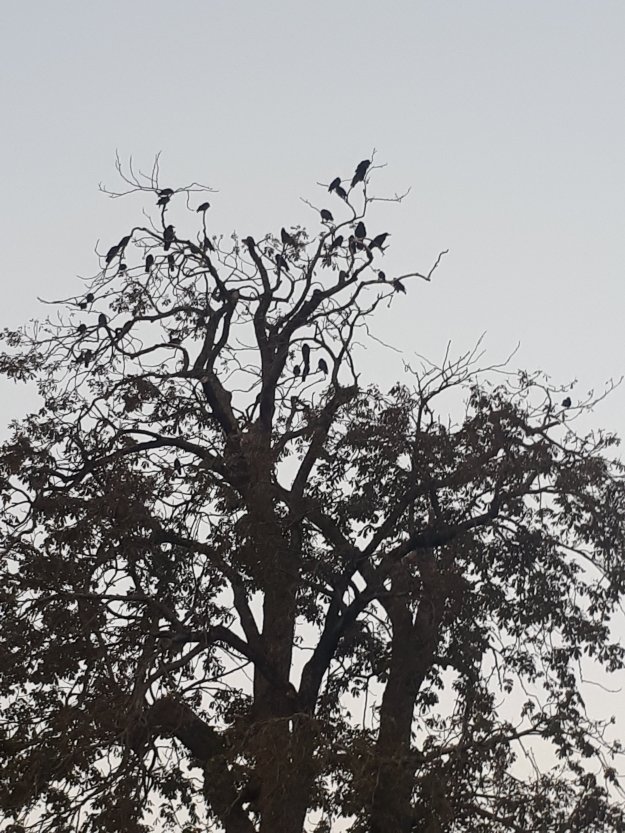
Dear Readers, at the end of a long day in Dorset there is something so comforting about the chacking of rooks and jackdaws as they roost in the trees in  Dorchester. There are some venerable horse chestnuts and beech trees right in the centre of town, and these act as beacons for the corvids who fly in from all directions. When they land, they talk away to one another for a few minutes before falling eerily silent, as the sky turns from mother-of-pearl to sapphire. Their ancestors have probably been roosting round about here since before the Romans came. 

Earlier today I caught the bus back to Milborne St Andrew, where the service for Dad will be held tomorrow. I love sitting on the top deck of the bus and peering into the fields as we speed by. Today I noticed that three of the big fields on the outskirts of the village are now full of sunflowers. They must be a special variety grown for their seeds, because the heads are so huge that they hang shyly down, and the petals are insignificant. Is this for vegetable oil for human consumption, I wonder, or is it for biofuels? There’s a lot of maize around too, as noted yesterday, and I suspect that this isn’t because the people of Dorset have developed a taste for corn on the cob..

I meet up with a friend who is doing the cakes for the refreshments tomorrow – E made the beautiful cake for Mum and Dad’s 60th Wedding Anniversary Party, and although she is 88 years old she is up to her ears in coconut cake and lemon drizzle.

Cakes from Mum and Dad’s 60th Wedding Anniversary Party in 2017. Note the freesias!

Then we walk down to the church. It’s harvest festival on Sunday, and there are sunflowers everywhere,  proper ones this time. Fruit is piled on the window ledges and there’s a distinct smell of apples.

Outside, Mum and Dad’s grave is a little overgrown – my brother, who lives nearby, has been self-isolating after his family got Covid, one after another, until he got it too. But someone has some secateurs, and so it’s easy to neaten it up, and tomorrow E will bring some dahlias from her garden to brighten it up. I am reminded again of what a lovely village Milborne St Andrew is, and how lucky Mum and Dad were to live their final years in a real community.

By the time you read this, I will have given my eulogy, and the Memorial service will be over, and I’ll be back home. I will share how it went with you on Monday. It feels as if we’re coming to the end of one stage, and the beginning of another. It’s time to come together and to remember, grieve and celebrate.

Return to Dorchester

Dear Readers, I am back in Dorset for a few days for my Dad’s Memorial Service in MIlborne St Andrew. He died in March 2020 but apart from a brief visit for his interment a year ago, I haven’t been back. And so, today, I am almost overwhelmed with memories. Every shop, every restaurant, reminds me of when I was visiting every few weeks while Mum and Dad were in the nursing home. The walks through the fields were taken at Christmas, when Dad was still alive. I turn to the natural world to take me out of myself, to remind me that life goes on and that every thing is both beautiful and temporary. In fact, maybe the beauty comes from the transitory nature of things.

But first, I am delighted to see these two moggies asleep in one of the windows on the High Street.

And then, look at these sunflowers!

And I love these woodpigeons, up to their shoulders in meadow grass.

And there is a Himalayan Honeysuckle down by the old machinery that used to flood the meadows.

I am pleased to see that there are sheep out on the field.

And I didn’t even realise that I’d seen a heron as well until I got home and uploaded this photo.

There is some lords and ladies….

and the harts tongue fern looks glossy and somehow primeval.

I believe that this might be our old friend wild angelica, though I have to say that it hasn’t done as well as the one in my garden.

And then I was distracted by the snails…

The field that was pasture last year is now full of sweetcorn, though the magnificent oak trees don’t seem to mind.

So by now I’m starting to feel a little less distressed. On I go along the bridle path.

I am passed by three runners – apparently there’s a charity road race on on Saturday in aid of MacMillan Cancer nurses. But once they’ve passed, silence reigns. I spot a new plant – this is red bartsia, which is apparently partially parasitic on grass and has its very own bee species. I sense a Wednesday Weed coming on….

Red bartsia

And then there is a single patch of rosebay willowherb which is abuzz with common carder bees – these little ginger critters are amongst the last bumblebees on the wing.

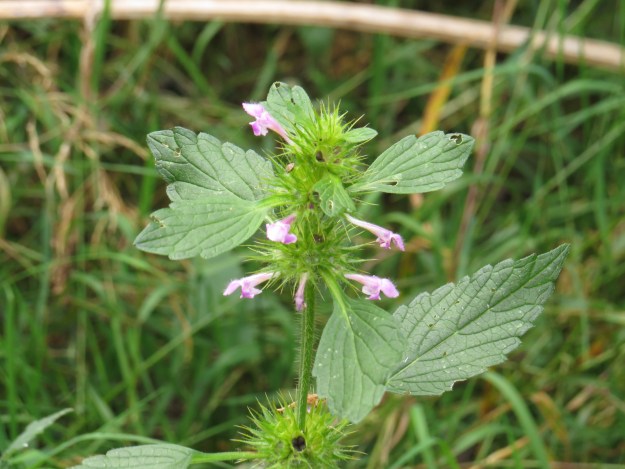
And how about this henbit deadnettle, another new plant for me (though very common). The whole plant seems to be exploding with enthusiasm.

And then I turn for home, and pause by the sheep because something catches my eye.

The swallows are circling and diving, catching the insects that the sheep have disturbed, fuelling up for their long flight back to Africa. And it might sound strange, but it makes me weep because the year is turning, and the swallows are going home, and maybe Mum and Dad have gone home too, but they’ve left me behind. Grieving can be so lonely, and that’s why grieving collectively is so important, and why I sense that I’ll feel better once we’ve gathered to say goodbye to Dad properly.

Bon voyage, swallows. Travel well, until the world turns.again.

Friday Quiz – Random UK Wildlife Facts!

Title photo by Michael R Perry

Dear Readers, this week is a miscellany of random animal facts for you to test your wits against. Answers in the comments by 5 p.m. UK time on Friday 10th September, and as usual, I will disappear your replies as soon as I see them, but please do write them down first if you are easily influenced by other people’s brilliance (like me :-).

So, here we go!

  1. What do we call a baby alpaca?
  2. What is the most dangerous animal in England, in terms of deaths?
  3. What is Britain’s fastest land mammal?
  4. Which four groups of animals technically belong to the Queen?
  5. What is a group of pheasants called?
  6. Owls are zygodactyl. What does that mean?
  7. The puffin’s scientific name is Puffinus puffinus. True or false?
  8. How many species of UK mammal hibernate (closest answer gets a bonus point!)
  9. Fieldfares and redwings migrate to the UK every year, but where from?
  10. Which UK thrush is named after its favourite food?
  11. James II paid over a thousand pounds for a pair of which birds?
  12. Which species of bird, first seen in the UK in 1956, is now the 7th most commonly seen species?
  13. What is Britain’s commonest bird of prey?
  14. Which is the only UK snake that lays eggs?
  15. The UK has only three native lizard species. Can you name them?