Not Austria Day Two – An Alpine Flower Quiz!

Flower meadows outside Obergurgl

Dear Readers, on our first day in Austria we would normally take a gentle stroll through the meadows above Obergurgl, before winding through the woods and ending up at the Sahnestuberl for cake. The restaurant’s cat would wander over for a quick scritch behind the ears before taking up her post watching for the next visitor.

This year, the meadows will bloom unseen by us, but no doubt the first haymaking is already underway or planned. They get two harvests in per year, and the Alpine cows look splendid on their diet, as do the Highland coos (further down the valley there are some belted Galloways as well).

Alpine blue cow

Highland cows

What is amazing to me, however, is that most of the meadow flowers in the Alps are not Alpine specialists at all – we can find them at home, or we could if we had better-managed meadows. I am most heartened by people’s enthusiasm for grassland and meadow flowers, but it’s really important in this case to choose native species – many meadow mixes contain a lot of ‘pretty’ plants that are not really adapted for the UK. And let’s not forget that native grasses provide food for many of our butterfly and moth caterpillars. 

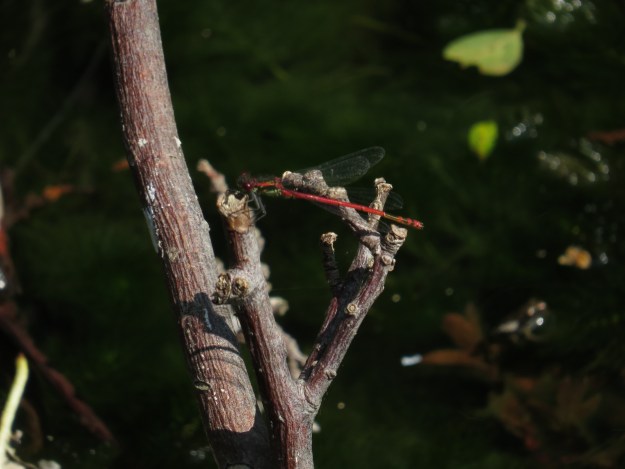
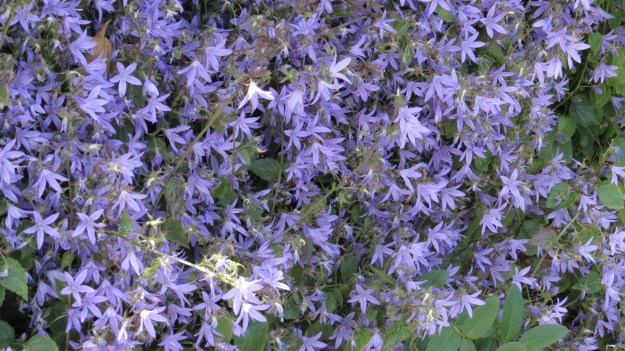
So, have a look at the Alpine flowers below, and see how many of them you recognise from the UK. As usual, answers in the comments by 5 p.m. on Monday if you would like to be marked, and if you don’t want to be influenced by those who have commented before, go ‘old-school’ and write your answers down first.

Here we go!

Meadow Flowers

Your choices are below. So, if you think plant 1 is kidney vetch, your answer is 1) a).

Good luck!

a) Kidney vetch (Anthyllis vulneraria)

b) Red clover (Trifolium pratense)

c) Melancholy thistle (Cirsium heterophyllum)

d) Rosebay willowherb (Chamerion angustifolium)

e) Bladder campion (Silene vulgaris)

f) Wood cranesbill (Geranium sylvaticum)

g) Early marsh orchid (Dactylorhiza incarnata)

h) Pasqueflower (Pulsatilla vulgaris)

i) Wild thyme (Thymus polytrichus)

j) Round-headed rampion (Phyteuma obiculare)

k) Spring gentian (Gentiana verna)

l) Yarrow (Achillea millefolium)


1)

2)

3) NB these are the seedheads. The flower is very different 🙂

4)

5)

6)

7)

8) This one is an Alpine specialist but can still be found in upland areas in the UK

9)

10)

11)

12)


Not Austria Day One

The Rotmoos Valley in Obergurgl

Dear Readers, for the past fifteen years (roughly) we have headed to Obergurgl in the Austrian Alps for two weeks at the beginning of July. It has always been such a pleasure, not just because of the clean air and the mountain vistas, but because the short season means that the flower meadows are extraordinarily diverse in plants and in invertebrates.However, this year what with all the Covid-19 shenanigans, I will be staying here in East Finchley instead. This is not such a hardship: when we do go away, I always have the sense that, when we come back, the decline into autumn is already advanced, even though it’s only mid July. This year, I’ll be able to experience the changes first hand, and indeed they’ve already started – there is a hazy, lazy feeling to most of the birds, though there is a male sparrow who is heavily into provisioning for his family (I am reminded that females prefer males who look after their families, and this little guy is extremely busy, diving in even when the young starlings are at their spikiest.I am wondering, though, what this squirrel is up to. He slinked along the fence as if he was tracking something, but I have no idea what. Every time I looked up he’d freeze, as if playing some version of ‘What’s the time, Mr Wolf’.And there are hoverflies everywhere. I think my yellow dress might have attracted them. Certainly, every time I looked up there was a hoverfly a couple of inches from my knee. A more useful attractant, though, has been the meadowsweet which is just coming into flower, and seems to be a magnet for the smaller, less conspicuous members of the family.

I’m not sure if this dress is yellow enough. What do you think?

And in other good news, my great willowherb, the buds of which have been infested by moth larvae for the past few years, seem to be fine. I’ve pulled a lot of it up to make room for the meadowsweet and some angelica, but I like to keep a bit of it because it’s very popular with all sorts of invertebrates. Plus, how pretty it is!

Greater Willowherb (Epilobium hirsutum)

But anyway, back to Austria. On arrival in Obergurgl (which involves a taxi to Heathrow (or a train to Gatwick), a flight into the Category Four airport at Innsbruck after a bumpy landing between the mountains, a wait at Innsbruck for people on another plane that have been delayed, and an hour and forty minute drive along switch-back roads) we fall into the restaurant at the Hotel Weisenthal and I beg for a Hugo. This is a long drink made with prosecco (or fizzy water) (or a combination of both), elderflower cordial, mint and lime, and this is when I know that the holiday has started. I note that some people also add gin, but this makes it all a bit too alcoholic and heavy for my tastes.The Hugo was apparently only invented in 2005 in the Italian town of Naturno by bartender Roland Gruber, but from there it spread through South Tyrol at a rate of knots, as an alternative to the Spritz (white wine and soda) which was all the rage back when i first visited in the 1990’s. Originally it included lemon balm syrup, but this was replaced with elderflower because this is much more readily available. Apparently Herr Gruber initally thought of calling it the ‘Otto’, but he decided that ‘Hugo’ was a bit more international.The first few nights in Obergurgl are already likely to involve a lot of wakefulness and strange dreams – I think it takes a while to acclimatise, even though the altitude is only 2000 metres. I certainly experience breathlessness at the beginning of the holiday, which is always a cue to take things easy at first. A Hugo seems to help just a little with the insomnia (that’s my excuse anyway). At least we won’t be having these problems in East Finchley (though I could probably simulate them by walking briskly up and down the stairs until I feel light-headed). I think I’ll just stick to the Hugo.Prost!

A New-ish Visitor

Common Swifts by Bruno Liljefors

Dear Readers, I was sitting in the garden on the hottest day of the year, and pondering whether swifts are the only animals that are named after their most important physical attribute. They are certainly swift, and they were cutting through the air as if they were flying scimitars – it wouldn’t have surprised me to see the blue sky peeling away in pieces as they tore past. It looked as if some of the birds were newly fledged – one almost flew into an open upstairs window, and another actually landed on the roof for a split-second, something an adult bird would never do unless it was breeding. Soon, they ‘ll be gone. Summer is only just getting going for us humans, but for many birds and insects it’s already almost over. The feeders are much quieter, the baby starlings visit in twos and threes rather than in mobs of thirty, and I suspect that some birds are going into the moult already. I don’t think the excitement is quite over yet though – I distinctly heard baby jackdaws a few hours ago, so I’m expecting them to visit and wreak havoc on the bird table.

But back to my new visitor. In the film above, you can see a female broad-bodied chaser (Libellula depressa). We knew they were around, because a friend of mine photographed one on her bird bath a few weeks ago. At this point in the year, it’s all about reproduction: the female drops her abdomen into the water and deposits the eggs a couple at a time, over and over again. How did she know the pond was here? She flew straight up the alley by the side of the house and started laying. A broad-bodied chaser was the first dragonfly to visit the pond back in 2011. Is it fanciful to think that this female is a descendent? My European Dragonflies book describes this species as one that ‘wanders freely in search of new ponds, sometimes appearing within hours of their creation’. Apparently it is also one of the creatures that is benefitting from climate change – it has extended its range north by over 100km in the last fifty years. Pity the creature who is already as far north as it can go, however.

Female broad-bodied chaser (Libellula depressa) Photo by Linda Alliston.

What magnificent, ancient creatures these are! This one looks to me as if she’s been hammered out of molten metal. Dragonflies can be a little frightening at close quarters, with their fierce flight and that clatter of wings. My book mentions that, although the male sometimes hovers nearby to deter other males when the female is laying her eggs, the females often also seek out water where there are no males, so that they can get on with the business of procreation in peace. The only creatures on my pond were the usual red and blue damselflies, who keep a very low profile when a dragonfly appears because the larger insects are not averse to munching on their smaller, daintier relatives.

Blurred action shot!

And, in other news some water and bog plants have arrived: I get mine from Puddleplants who have been a most reliable source of all things aquatic since I started the pond. They rang me up yesterday to tell me that they weren’t happy with the quality of one of the plants that I’d ordered so they suggested a couple of alternatives, and now I’m the happy owner of a water plantain, along with a teasel, a bog-bean and some other pollinator-friendly bog plants. I shall let you know how I get on with them all! Though I’ll be hoping that the temperature has gone down a bit by the time I get stuck in to planting. Like all the plants in the garden, I wilt when exposed to too much heat.


The Blooms of the Buddleia

Buddleia blooms just getting going…

Dear Readers, one of the unexpected pleasures of being in lockdown has been how I’ve been able to pay attention to little things. Out of my office window I have a view of one of the two  monster Buddleia(s) that are growing in the front garden. Earlier in the spring, I wrote about how one of them was smothered in aphids, but it doesn’t seem to have stopped either plant from producing a bumper crop of sweet-smelling flowers. The scent wafts up and has had a calming effect on my nervous system during several of the never-ending series of Zoom calls that work entails. But as the days have gone by, I have noticed how the whole shape of the panicle changes. First of all we get the wispy little things as in the photo above, which give no real idea of what’s to come.

As time goes on, each of the groups of flowers opens, creating an effect rather like those topiary box features that I used to see before the advent of box moth put a stop to all that nonsense, as you can see in the inflorescence to the left of the photo. The one in the centre is rather further along its journey, with the different layers of flowers gradually growing together.

And in the end, you have a perfect flowerhead (literally – the flowers are what is known as ‘perfect’, meaning that each flower has both male and female parts and is effectively a hermaphrodite). The individual flowers die back from the end closest to the stem, rather like a sparkler in reverse – in fact Buddleia always reminds me of a firework.

The lavender is in flower too, and there are bees everywhere – mostly honeybees and bumbles, but there are a few mysterious smaller bees, tiny zippy critters with white faces. I’m hoping to get a photo so that I can identify them, but they are proving to be tricky at the moment. There are also some hoverflies who look so much like honeybees that it’s only their eyes that give them away. There will be photos of them coming soon, too (if they cooperate).

Out in the back garden, a hebe belonging to the folk next door is proving to be an absolute bee-magnet. I think there is more of it in our garden than in theirs, which suits me fine.

And their cherry tree has more fruit than I can ever remember – the young starlings were getting into the cherries earlier though so I don’t imagine they’ll be around for long.

And the first little waterlilies are appearing in the pond. We split and repotted all the waterlilies in January so I wasn’t expecting much, but these are very pretty and delicate. I have a bumper order of water plants coming in the next few days, so it’s just as well I’m on a fortnight’s holiday from tomorrow.

One thing that has surprised me this year is that I have had not a single leaf of duckweed. It’s true that the pond was cleaned out earlier this year, but even so, the stuff is so pernicious that I expected some to come back. Fingers crossed that this happy state continues.

There are a lot less tadpoles than there were, but there are still a few adult frogs around – I think it’s been far too hot and dry for them to want to leave.

And there are still lots of large red damselflies about, some of them laying their eggs into the water. I expect to have a bumper crop of damselfly larvae at some point too.

And so, as I head into a couple of weeks holiday, I’m very pleased that I’ve got my eye on the small beauties that are very local. Normally at the beginning of July I’d be heading off for my annual fortnight in Austria, and my challenge is to distil the essence of what that holiday means to me and apply it to East Finchley. This will be something of a challenge, what with no mountains or chairlifts and a grave lack of cow bells, but like all things, it’s not just a physical place, it’s a state of mind. So, come with me as I try to recreate the peace of an Austrian meadow in my back garden. I suspect that, at the very least, apricot cake will be involved.


Wednesday Weed – Black Horehound

Black horehound (Ballota nigra)

Dear Readers, I might have mentioned that this plant was described in my field guide as ‘easily overlooked’, and so it is. It has none of the green freshness that red dead-nettle often shows (although it’s in the same family), and it is said that the foliage has an unpleasant scent when bruised (hence its alternative name of ‘Stinking Roger’) and may turn black if damaged. So, all in all not a plant to make one leap around rejoicing, but I have a fondness for all dead-nettles, and the little flowers have a teddy-bearish look to them (if you squint). The plant has a characteristic downy appearance, which may have contributed to its rather Gothic common name.

Photo One byH. Zell / CC BY-SA (https://creativecommons.org/licenses/by-sa/3.0)

Photo One

The origins of the name ‘black horehound’ are up for debate. Most people agree that the ‘horehound’ bit comes from the Old English word ‘har’ (meaning hairy) and ‘hune’, meaning plant. Apparently it has also been linked to Horus, the sun god of ancient Egypt. The Latin name ‘ballota’ means ‘to reject’, because grazing animals are largely deterred from the plant by its smell, described as ‘mildewy’, ‘humid’ and ‘rotten’. As usual I didn’t have the opportunity (or in truth the inclination) to give the plant a good trample, so do let me know what you think if you haven’t had so many scruples.

In spite of the smell, you can apparently make a syrup from the young plants, but a bit of digging about on the interwebs makes me think that the syrup is probably more of a cough syrup than something to pop into a cocktail. In past times, it was frequently used as a cure for dog bites (probably another reason why the ‘horehound’ name has stuck), and was also used as an expectorant, a stimulant and as a cure for worms (The Morning Star (august organ of the Communist Party in the UK) describes it as ‘a rare and exotic plant’ and mentions that it was used during the Second World War as a vermifuge).  It has a history of use as a cure for anxiety, and to reduce flow in heavy periods, and has sometimes been used to alleviate motion sickness.

In Southern Italy, the whole of the plant was burned to fumigate a room and repel insects.

Black horehound is also an ingredient in the medieval ‘Four Thieves Vinegar’, which was considered to be a way to protect oneself from catching the Plague. The legend has it that there were a series of burglaries in the houses of plague victims, where all sensible people were too afraid to enter. The eponymous Four Thieves were caught in the act and, to save themselves from the gallows, they gave up their ‘secret recipe’ that had kept them safe from the dread disease. One recipe goes as follows:

Take three pints of strong white wine vinegar, add a handful of each of wormwood, meadowsweet, wild marjoram and sage, fifty cloves, two ounces of campanula roots, two ounces of angelic, rosemary and horehound and three large measures of camphor. Place the mixture in a container for fifteen days, strain and express then bottle. Use by rubbing it on the hands, ears and temples from time to time when approaching a plague victim.

Well, if only we’d known a few months ago. I suspect the smell from all that camphor would have made the social distancing a whole lot easier too.

In Germanic legends, black horehound is apparently known as ‘old woman’, and was believed to be associated with Frau Holle, a forest goddess who is described as being both ‘friendly and punishing’. This seems like a rather complicated combination, but then the gods were ever quixotic.

And now, of course, a poem. I rather like this very much, especially the last few stanzas, though I find myself mentally inserting commas. See what you think.

Barber

Learn from the man who spends much of his life speaking
             To the back of your head knowing what it means to follow
The razor’s edge along a worn strop or random thoughts
             As they spring so invisibly from the mind to a mouth
Who shouldered soldiers in two wars and fled fire fields
             Undecorated who fathered once but was fatherless forever
And who works his sentiments in deeper into your scalp
             Under a sign on the knotty-pine walls whose rubric reads
quot homines, tot sententiae which means he sees
             In you his suffering smells of horehound tonics and gels
Pillow heads and powders and a floor full of snippings
             Swept neatly every evening into a pile for the field mice
All those roundabout hours only a man who fixes his tie
             To clip crabgrass crowding a lady’s grave could believe
With a certain clean devotion and who would never for one
             Moment dream of hurting you when your back was turned
Source: Poetry (November 2010


Photo Credits

Photo One byH. Zell / CC BY-SA (https://creativecommons.org/licenses/by-sa/3.0)


Sunday Quiz – Blue and Pink – The Answers

Antirrhinums

Goodness Readers, I shall have to set you all a real stinker for next week! No fewer than 3 of you: Fran and Bobby Freelove, FEARN and Liz Norbury, all got 20/20, but I shall give the top prize to Liz, who gave the best answer to the bonus question. And special kudos to Anne, who got 17/20 even though she lives several thousand miles away in South Africa and Alittlebitoutoffocus who also got 17 even though he lives in Switzerland! A big round of applause to all of you, and well done!

Part One – Blue UK Wildflowers

1)f) Bluebell (Hyacinthoides non-scripta)

2)h) Green alkanet (Pentaglottis sempervirens)

3)a) Common Lungwort (Pulmonaria officinalis)

4)j) Periwinkle (Vinca major)

5)e) Bugle (Ajuga reptens)

6)b) Ground ivy (Glechoma hederofolia)

7)i) Wood forget-me-not (Myosotis sylvatica)

8)c) Borage (Borago officinalis)

9)d) Trailing bellflower (Campanula poscharskyana)

10)g) Lavender (Lavandula angustifolia)

1)1)f) Bluebell (Hyacinthoides non-scripta)

2)2)h) Green alkanet (Pentaglottis sempervirens)

3)3)a) Common Lungwort (Pulmonaria officinalis)

4)j) Periwinkle (Vinca major)

5)e) Bugle (Ajuga reptens)

6)b) Ground ivy (Glechoma hederofolia)

7)i) Wood forget-me-not (Myosotis sylvatica)

8)c) Borage (Borago officinalis)

9)d) Trailing bellflower (Campanula poscharskyana)

10)g) Lavender (Lavandula angustifolia)

Part Two – Pink

11)m) Lesser burdock ( Actium minus)

12)o) Field bindweed (Convulvulus arvensis)

13)r) Everlasting broad-leaved pea (Lathyrus latifolia)

14)l) Common mallow (Malva neglecta)

15)t) Hedge woundwort (Stachys sylvatica)

16)p) Red clover (Trifolium pratense)

17) s) Red valerian (Centranthus ruber)

18) q) Red campion (Silene dioica)

19)k) Redshank (Persicaria maculosa)

20)n) Red deadnettle (Lamium pupureum)

11)m) Lesser burdock ( Actium minus)

12)o) Field bindweed (Convulvulus arvensis)

13)r) Everlasting broad-leaved pea (Lathyrus latifolia)

14)l) Common mallow (Malva neglecta)

15)t) Hedge woundwort (Stachys sylvatica)

16)p) Red clover (Trifolium pratense)

17)s) Red valerian (Centranthus ruber)

18)q) Red campion (Silene dioica)

19)k) Redshank (Persicaria maculosa)

20)n) Red deadnettle (Lamium pupureum)

And here’s a bonus: several of these plants can have both blue and pink flowers at the same time. Can you name them, and tell me why?

Many members of the borage family (including borage, forget-me-not, green alkanet and lungwort) have flowers that change from blue to pink as they age – there is some evidence that this might serve as an indication to pollinators that the older flowers have already been pollinated).

On Father’s Day

Thomas Reginald Palmer (5.12.35 to 31.3.20)

Dear Readers, it is my first Father’s Day without my Dad, and as usual I have marked the occasion by falling flat on my face. I have noticed that on occasions of high stress and sadness, when I am too much ‘in my head’, my body reminds me of its existence by bringing me literally ‘down to earth’. Fortunately, apart from a scraped knee and grazed hands, nothing much is damaged apart from my dignity, but it does make me think that it is no use pretending that these days don’t hurt. Carrying on ‘as usual’ doesn’t work.

It is less than three months since Dad died, and while on the face of it things are back to normal, I look in the mirror and can see that they are not. I am anxious about the smallest, most insignificant things at work, because it’s easier than worrying about the existential crises that being an orphan have brought up. I can’t trust myself to have a conversation where I mention my loss because I never know if I’m going to be able to finish the sentence without crying. Everything reminds me of Dad, and of Mum. On my walk to take photos in East Finchley last week, I found myself in tears at the sight of a mallow shrub, one of Dad’s favourite plants. He took a seedling with him from London to Dorset back in 2002 when he and Mum moved, and apparently it, and the roses, are being well looked after by the new owners of the bungalow.

Roses surrounded with the paraphernalia of medications at Mum and Dad’s bungalow back in 2018

And at the moment, there isn’t even a grave to visit. Dad’s ashes are still on a shelf at the funeral home, waiting for his name to be added to the gravestone so that we can inter him with Mum. And although we have a September date in the diary for Dad’s memorial service, goodness only knows if it will actually happen then. Everything is in abeyance, and trying to move forward is such an effort when there is so much uncertainty.

When I think about Dad’s last few months, I wonder if on some level he knew that his time was coming to an end. At Christmas he developed the idea that his mother and father had moved into one of the flats across the way, and that they’d be joining us for the turkey and crackers. He kept springing up and looking anxiously out of the window to see if he could see them coming.

‘I never knew my Dad!’ he said, which was true: Dad’s father was killed in a tank in Tunisia in 1943, after he joined up as a commando at over 50 years of age. Dad remembered his father walking into the house and doing a cartwheel from the living room to the kitchen, and that was the only thing Dad ever told us about him.

When we sat down to eat, Dad couldn’t settle, and wanted us to wait until his parents arrived before we started on our lunch.

‘I don’t think they’re able to come, Dad’, I said at last.

Dad’s face crumpled but then he pulled himself together.

‘I’m really upset’ he said, ‘ they only live across the road’.

I made up some story about ‘Mum’ not being well enough, and that seemed to mollify him a bit. Increasingly he was ‘spending time’ with people that he’d loved and lost years before. Nonetheless, I know that he was enjoying his life, and that he wasn’t ready to die – he had friends at the home, and was always relating the various adventures that he’d had, real and imaginary. Although Dad wasn’t directly killed by Covid-19 (his test was negative), I still believe that the pandemic contributed to his death: he was hospitalised to protect the other people in the home when he developed a chest infection but, while waiting for almost four days for the results of the test, he became so agitated that he was heavily sedated, which would have exacerbated his breathing problems. I blame no one for what happened, because I’m sure that everyone was acting in the best interests of the greatest number, but my Dad became yet another statistic in the figure of ‘excess deaths’ in the UK, which currently stands at over 65,000 people.

In many ways, I have been lucky. I was able to be with Dad when he died, a privilege denied to so many people during the pandemic. He was 84, and I’d had him as my Dad for all those years. He was a good Dad to me, and I have no bad memories of him as a father. We were often allies: we would roll our eyes at one another when Mum ‘went off on one’, and we could sit in peaceable silence watching Pointless or Midsomer Murders for hours, only occasionally trying to outdo one another with the correct answer to a European Capital beginning with ‘T’, or contributing an insightful comment on some MacGuffin in the plot. But the tax we pay on love is the grief when the person is gone, and the sense of rage that somehow, maybe, it could have been otherwise. I accept that Dad is gone, and yet I don’t.

Edna St Vincent Millay probably best sums up where I am at this moment, though in half an hour I might be in a calmer, more reflective space. And when I think of all the other unnecessary deaths that this pandemic has brought, I am not resigned to that either. When all this is over, I hope that someone is held to account for the shambolic incompetence of this government, who have moved from fiasco to fiasco without the slightest sign of regret or apology. Shame on them.

Dirge Without Music

Edna St. Vincent Millay – 1892-1950

I am not resigned to the shutting away of loving hearts in the hard ground.
So it is, and so it will be, for so it has been, time out of mind:
Into the darkness they go, the wise and the lovely. Crowned
With lilies and with laurel they go; but I am not resigned.

Lovers and thinkers, into the earth with you.
Be one with the dull, the indiscriminate dust.
A fragment of what you felt, of what you knew,
A formula, a phrase remains,—but the best is lost.

The answers quick and keen, the honest look, the laughter, the love,—
They are gone. They are gone to feed the roses. Elegant and curled
Is the blossom. Fragrant is the blossom. I know. But I do not approve.
More precious was the light in your eyes than all the roses in the world.

Down, down, down into the darkness of the grave
Gently they go, the beautiful, the tender, the kind;
Quietly they go, the intelligent, the witty, the brave.
I know. But I do not approve. And I am not resigned.

Sunday Quiz – Pink and Blue

Antirrhinums

Dear Readers, this quiz was inspired by happenings at my workplace, where two of my colleagues are expecting babies in the autumn. I should point out that neither they nor I are wedded to this idea of pink-for-a-girl-and-blue-for-a-boy, but my garden does have a blue/pink/white theme, and as so many of my favourite UK wildflowers are in these colours  I couldn’t resist. As usual, this is in two parts: blue first and then pink, and to make it a (bit) easier, it’s multiple choice.

Please submit your answers in the comments by 5 p.m. Monday (UK) time if you want to be marked, but it’s fine to just play along in private :-). If you intend to put your answers in the comments, you might want to write them down first to avoid being side-tracked by any speedy Peeps. Have fun!

Part One – Blue UK Wildflowers

Your choices are:

a) Common Lungwort (Pulmonaria officinalis)

b) Ground ivy (Glechoma hederofolia)

c) Borage (Borago officinalis)

d) Trailing bellflower (Campanula poscharskyana)

e) Bugle (Ajuga reptens)

f) Bluebell (Hyacinthoides non-scripta)

g) Lavender (Lavandula angustifolia)

h) Green alkanet (Pentaglottis sempervirens)

i) Wood forget-me-not (Myosotis sylvatica)

j) Periwinkle (Vinca major)

1)

2)

3)

4)

5)

6)

7)8)

10)

Part Two – Pink 

k) Redshank (Persicaria maculosa)

l) Common mallow (Malva neglecta)

m) Lesser burdock ( Actium minus)

n) Red deadnettle (Lamium pupureum)

o) Field bindweed (Convulvulus arvensis)

p) Red clover (Trifolium pratense)

q) Red campion (Silene dioica)

r) Everlasting broad-leaved pea (Lathyrus latifolia)

s) Red valerian (Centranthus ruber)

t) Hedge woundwort (Stachys sylvatica)

11)

12)

13)

14)

15)

16)

17)

18)

19)

20)

And here’s a bonus: several of these plants can have both blue and pink flowers at the same time. Can you name them, and tell me why?

More Fun From ‘Garden Birds’ by Mike Toms

Dear Readers, my new favourite bird book is ‘Garden Birds’ by Mike Toms, in the New Naturalist series. You might remember that I included some titbits (no pun intended) about different species of birds  a few weeks ago, but the book is such a cornucopia of interesting facts that I thought I’d share some more. In particular, this week I have been reading about feeding birds: who does it, how popular it is, what works for different kinds of birds, and how far it changes the behaviour of birds. So, here in no particular order is my new harvest of bird-related facts.

  • The earliest description of bird feeding comes from the ancient Hindu writings of the Vedic period. One practice was known as Bhuta Yajna, and was one of the five great sacrifices used to develop spiritual growth. It involved placing food offerings known as bali on the ground: these were intended for ‘animals, birds, insects, wandering outcastes and beings of the invisible worlds‘.
  • In 2015, 55% of all households in the UK fed birds, with 65% saying that they fed all year round.
  • In the UK, there is at least one bird feeder for every nine potentially feeder-using birds.
  • An estimated 150,000 tonnes of bird food are sold every year, with an annual consumer spend of over 200m GBP. About 1000 tonnes is probably me (or at least that’s how it feels at the height of starling season).
  • Older people seem to be more inclined to feed birds than younger people, but of course this could relate to lots of factors: older people often have more time on their hands, are more likely to have a home and garden of their own, and are also more likely to be financially secure.
  • Within Europe, feeding of wild birds is common in Germany, Poland, Finland, Switzerland, the UK (of course) and the Netherlands, but is much rarer in Mediterranean countries. Toms speculates that part of that might be cultural (there’s a much higher incidence of hunting of small wild birds in southern Europe), but also that the winters are so much harsher in Northern Europe that people are more inclined to take pity on those poor feathered scraps shivering in the snow. At least, that’s how I feel about it. Interestingly, a study of bird feeding in Michigan and Arizona found something similar  – 66% of respondents in Michigan provided food, as opposed to just 43% of people in Arizona. Humans love to feel needed, and that they are doing something useful, and I can see how this would be much more apparent in a Michigan winter than an Arizonan one.
  • The top three reasons that people give for feeding wild birds are ‘pleasure’, ‘contributing to the survival of wild birds’, and ‘studying behaviour’. I think they would be my top three as well.
  • The reasons that people worried about feeding birds were ‘the risk of disease transmission'(between the birds rather than between birds and humans), the risk of attracting predators, and the risk of attracting unwanted species to the garden. For me, the first two are a worry – I was particularly upset by the lurking cats in the first few years in the house. I’ve never worried about unwanted species, because I tend to be careful about what I feed, and how much, though I do understand how being inundated with feral pigeons could cause problems with the neighbours.
  • Both Great and Blue tits seem to be extremely reluctant to provide supplementary food (given by humans) to their nestlings – they obviously have a very finely-tuned understanding of what their youngsters need, and will not give them anything that they’re unsure of. On the other hand, they visit feeders for food for themselves, so our suet pellets and sunflower hearts seem to help to fuel the adults during the busiest part of their year, which can only be a good thing.

Great tit (Parus major)

  • Sunflower hearts are among the most desirable (and expensive) of bird food offerings: at 6,100 kcal per kg, they are higher than peanuts(5700 kcal per kg) and because they don’t have to be dehusked, they are also better than black sunflower seeds (5000 kcal per kg). Most sunflower seeds in the UK come from Eastern Europe and Russia, where they have long been bred to maximise their fat content. Just as well that wild birds don’t have to worry about cholesterol or obesity.
  • We’ve talked before about the way that goldfinches seem to be abandoning nyjer seeds for sunflower hearts, but there’s an interesting corollary in the book. Previously, goldfinches were often beaten back from the sunflower seeds by greenfinches, who are more aggressive and used to arrive in large flocks (those were the days). Since the greenfinch numbers were horribly reduced by finch trichomonosis, the goldfinches haven’t had to mess about with the nyjer and have the sunflower seeds (mostly) to themselves. It will be interesting to see what happens when/if the greenfinch population recovers.


  • Do not put away your nyjer feeders just yet though: siskins and lesser redpolls apparently favour these seeds above all others. Report back, Readers! In my garden siskins only ever appear when it’s snowing. Goodness only knows where they go the rest of the time.

  • Many birds prefer live mealworms to anything that you can offer, because they are closest to the wild food that robins, blackbirds and starlings would normally choose. Blimey they’re expensive though. I suppose the fact that they are higher in protein than beef or chicken is instinctively known by our avian friends.

  • One for my North American readers: apparently the increasing use of hummingbird feeders has been linked to the changes in the range of Anna’s hummingbird (Calypte anna), which now overwinters and probably breeds at higher latitudes than it did a few decades ago. The question is, though, has the increase in food driven the range expansion, or has the range expansion encouraged people to put out food for these wonderful birds? Correlation does not always mean causation, as we know, and add in climate change to the picture and things get even more confusing.
  • And on the subject of nectar feeding: to my surprise, Toms describes many cases of birds in the UK nectar-feeding from plants. Blue tits feed from a variety of flowers over 33 different counties in the UK, and although it wasn’t the preferred food (the birds would rather take peanuts, but were often outcompeted) the nectar taken in this case from flowering currant (Ribes sanguineum) could account for up to 50% of the bird’s daily calorie intake. Blackcaps have also been seen feeding from Mahonia and Kniphofia, and a wide range of other warbler species will also take nectar as they travel through the Mediterranean regions during their migration. I will have to pay a lot more attention to what the birds in my garden are doing on the Ribes that I have during the spring – I’d always assumed that they were just perching and waiting their turn at the feeder. Time to get the binoculars out, I think.
  • And finally, a quick one for my Australian readers: apparently in Australia it’s not unusual to put out meat for birds such as the Laughing Kookaburra and the Grey Butcherbird. Who knew? Well, not me, obviously. Let me know how that works, folks! I have visions of bird barbecues with steaks hanging from the trees, but I’m sure I’m just being fanciful.

Well, all in all ‘Garden Birds’ is a positive cornucopia of information, and I suspect that I will be sharing more information with you shortly. Let me know what you’ve discovered about the birds in your garden – it’s endlessly interesting to me to hear who visits, and what they get up to. I suspect that gardens are a treasure trove of useful information about the populations and behaviour of all kinds of birds, and what better time to observe them than when most of us can’t get out and about very much? Lockdown birding is definitely a ‘thing’.

A Witch’s Broom

Babylon witches broom on crack willow

Dear Readers, whilst admiring the crack willow for Wednesday’s post, I noticed this rather strange growth on one of the twigs. So splendid was it that I had to get my husband to hold the branch down so that I could get a photograph. It looks rather as if the catkins, normally so long and elegant, have gone completely berserk, and so I contacted my friends over at the British Plant Galls Association to see what they thought.

Apparently, this is a Babylon willow witches broom. Who ever guessed that there was such a thing? And the mystery doesn’t stop there. I had alway thought of galls as being caused by tiny insects such as the larvae of moths or wasps, or by fungi, but this is caused by something very different.

There are many different types of ‘witches broom’. What they have in common is that the growth of the plant is distorted, and is often multiplied or mutated – in the echinacea in the photo below, the leaves have been ‘persuaded’ to behave like flowers.

By Estreya - Own work, CC BY-SA 3.0, https://commons.wikimedia.org/w/index.php?curid=4608429 One by

Phyllody on a coneflower (Photo One )

The cause of the distortion is a tiny bacterium known as a phytoplasma. These mysterious creatures were only discovered in 1967 – they are tiny even by the standards of bacteria, have no cell wall, and have proved to be more or less impossible to culture. They are spread from plant to plant by sap-sucking insects such as leafhoppers, and once inside a plant they live in the phloem, which transports both the sugars and nutrients that the plant needs, and the phytoplasmids which it definitely doesn’t.

Our witches broom is probably not good for the crack willow, but there is only one gall that I can see. Other variants can be much more harmful – there is one kind of witches broom that can devastate cocoa plantations, and some others that can affect trees grown for timber. Furthermore, all kinds of organisms can cause this kind of growth – viruses and fungi can affect normal shoot and leaf development, as can various insects. All you need is something that affects auxins, which are chemicals at the shoot or bud tip – normally, these tell the plant to stop growing, but if they are somehow turned off, the plant continues to make catkins, or leaves, until you get a matted, nest-like mass. In fact, some animals actually take advantage of this nest-like appearance by using it as a place to sleep, like the Northern Flying Squirrel (North America’s only gliding rodent).

Photo Two byBy PJTurgeon - Own work, CC BY-SA 3.0, https://commons.wikimedia.org/w/index.php?curid=23282295

Northern Flying Squirrel (Glaucomys sabrinus)(Photo Two)

I am especially impressed by the effect of phytoplasma on the bamboo below, though I wouldn’t be quite so happy if I was a giant panda, as although the bacterium can induce a huge mass of distorted flowers, these are usually sterile.

Photo Three By Amityadav8 - Own work, CC BY-SA 4.0, https://commons.wikimedia.org/w/index.php?curid=62620401

Witches broom disease of bamboo (Photo Three)

So, here I am with a whole new selection of things to think about. As is usual, I imagine that I’m about to see galls everywhere. If you have a favourite plant gall (hasn’t everyone 🙂 ) do share. The natural world is full of all sorts of strange and wonderful things, for sure.


Photo Credits

Photo One By Estreya – Own work, CC BY-SA 3.0, https://commons.wikimedia.org/w/index.php?curid=4608429 

Photo Two byBy PJTurgeon – Own work, CC BY-SA 3.0, https://commons.wikimedia.org/w/index.php?curid=23282295

Photo Three By Amityadav8 – Own work, CC BY-SA 4.0, https://commons.wikimedia.org/w/index.php?curid=62620401